
On this day in 1863, Princess Alexandra of Denmark, eldest daughter of the heir to the Danish throne, married Prince Albert Edward, the Prince of Wales.
Queen Victoria and Prince Albert had considered Alexandra a possible bride for Bertie as early as 1858, though she was not their preferred choice due to tensions between Denmark and Prussia over Schleswig‑Holstein. The German princesses they favoured were all rejected, and when Bertie finally met Alexandra in September 1861, through an introduction arranged by his sister, Princess Victoria, the pair got on well – though he remained non‑committal. After Prince Albert’s death that December, and eager to ease his mother’s grief, Bertie proposed during their next meeting at the Palace of Laeken. Their engagement was formalised on 9th September 1862.
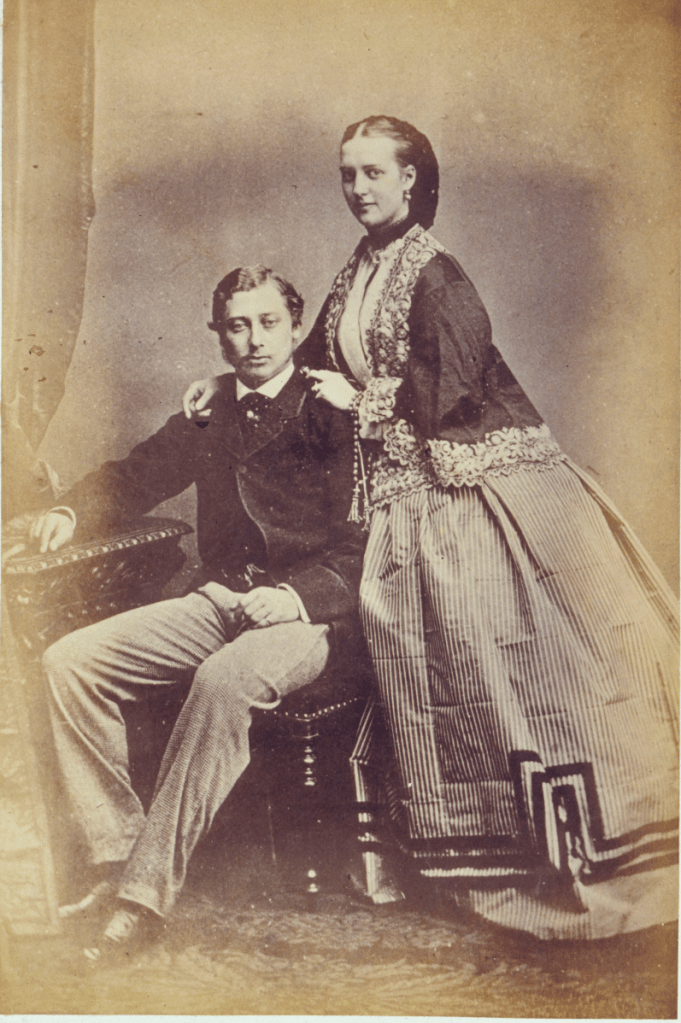
The below engagement portrait was taken by Ghémar Frères, photographer to Leopold I, King of the Belgians. In it, Alexandra is wearing an informal day dress with a striking Greek key braid trimming at the hem, and a ‘Zouave’ style short jacket edged in lace or embroidery. The prince has on a velvet lounge jacket and check trousers.
Their engagement was officially announced in November 1862 and the wedding date set for 10th March the following year. This left a relatively small window of time for Alexandra’s dress and trousseau to be arranged.
After the engagement, Alexandra spent several months in England to prepare for the life she was entering. Queen Victoria, still in profound mourning, took little part in the wedding arrangements, so the task of guiding Alexandra fell to Princess Mary Adelaide of Cambridge – her mother’s first cousin and a warm, familiar presence. During a visit to Windsor, Mary Adelaide recorded their reunion in her diary:
“Darling Alix too over-joyed at meeting to speak. Later played in Alix’s room en souvenir de Rumpenheim; then accompanied her through the state rooms.”
(The ‘Rumpenheim’ mentioned was a castle on the banks of the Main river in the German city of Offenbach am Main, where members of the Hesse-Kassel family would holiday during the summer.)
Even so, Alexandra sought Queen Victoria’s approval on every significant element of the trousseau, which was understandable, given that her future mother‑in‑law was financing most of it.

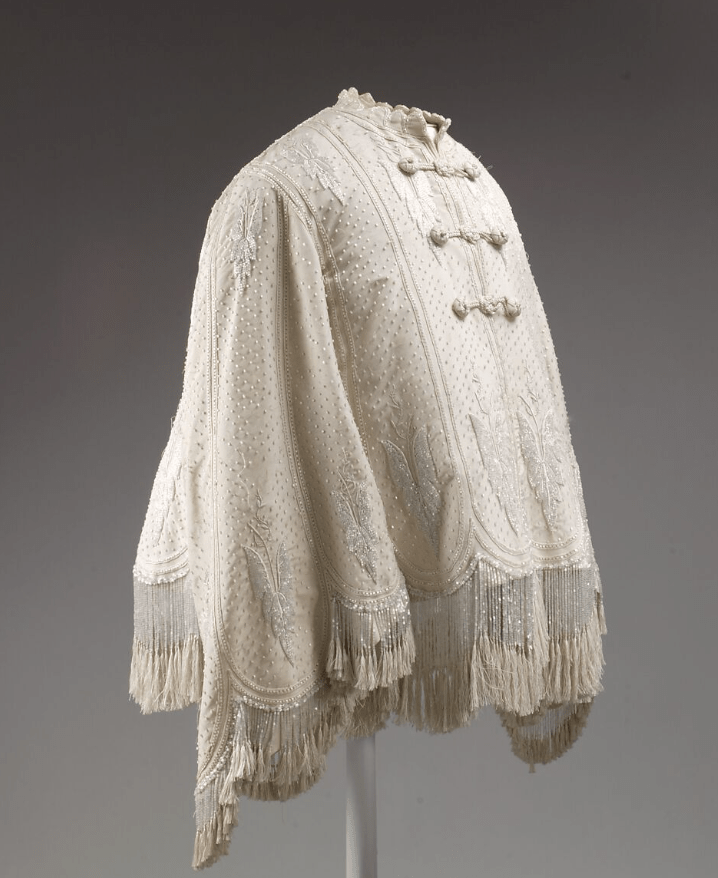
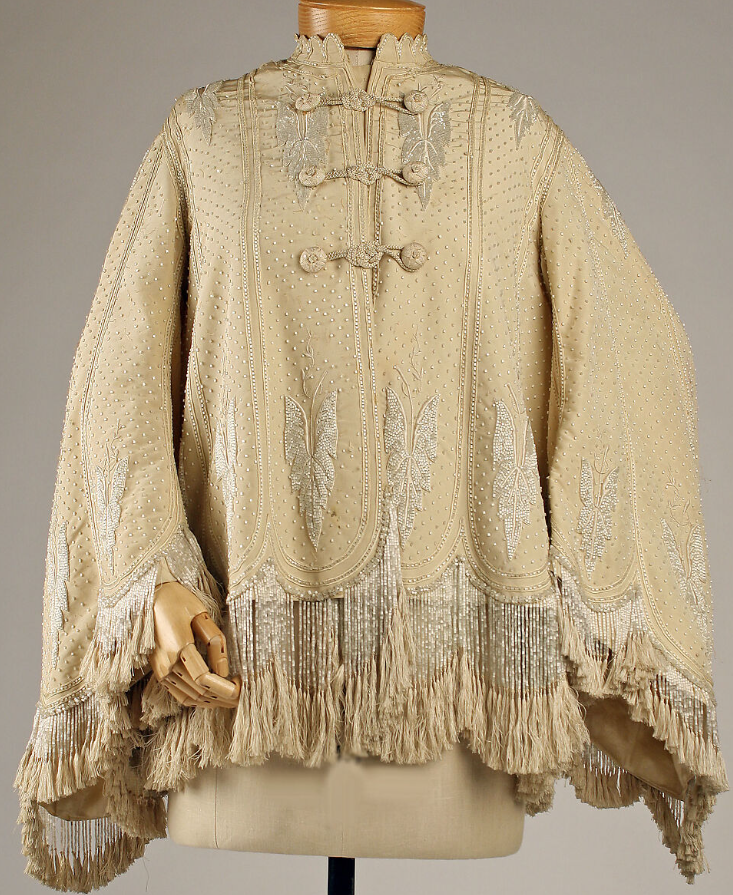
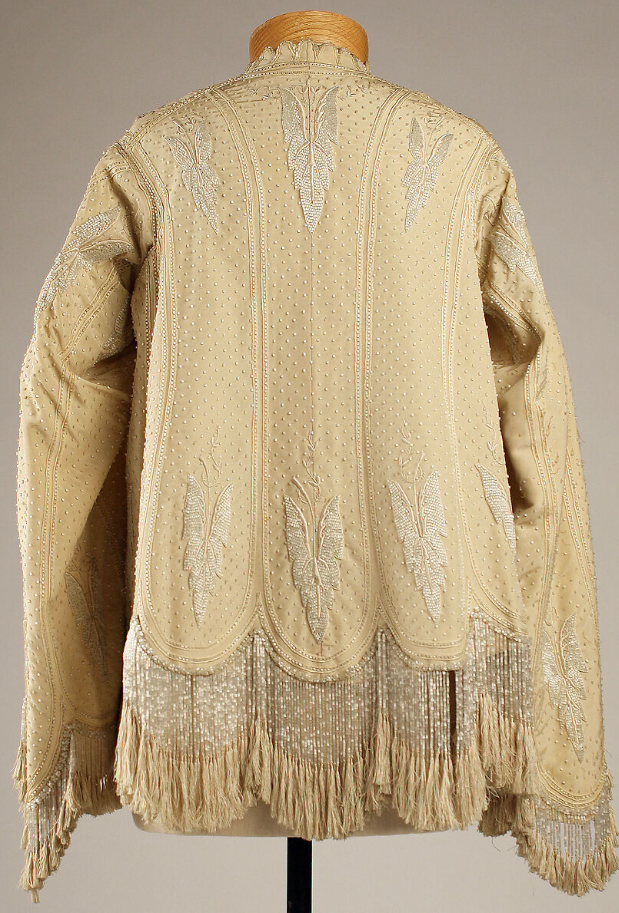
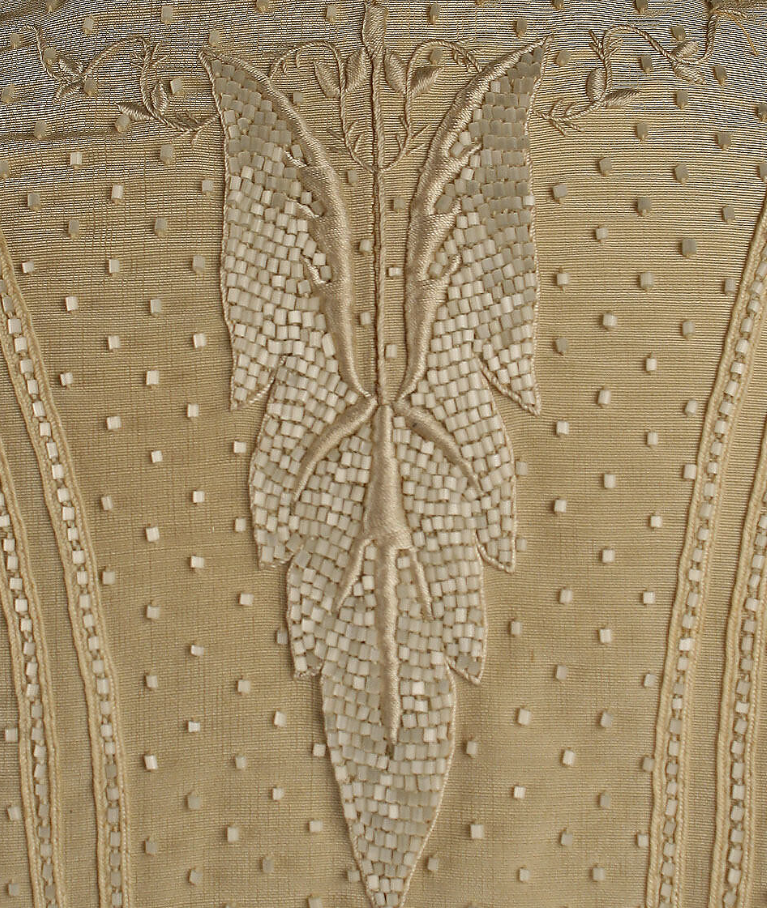
The larger part of the trousseau was made in London from British and Irish materials. The lingerie, however, was prepared in Denmark. Some garments from the trousseau do still survive – the below mantle is one such item. Made by Dieulafait & E. Bouclier, ca. 1863, of white faille silk and decorated with beadwork and fringing.
© The Metropolitan Museum of Art
Once completed, part of the trousseau was displayed publicly in Copenhagen. On 26th Februaryn 1863, The Danmark offered this admiring account:
“The bridal garments of Princess Alexandra have attracted great notice here. Their fabrication has been entrusted to Mr. Levysohn, of this city, and have been exhibited to the fair sex in his establishment in Kjobmagergade. Finer specimens of needlework will not easily be found. The stitches are so fine and the work so delicate, that they have excited universal admiration. No machine has been employed. On each piece has been embroidered her Royal Highness’s initials, below the English crown, and this alone has given 600 such embroideries. The time allowed being so short, several hundred persons have been employed, but the greatest accuracy and uniformity has been obtained. The handkerchiefs have been ordered in Paris, and are masterpieces in their kind, the embroidery being remarkably tasteful and beautiful. The English crown, from its peculiar shape, has offered various difficulties, but they have been triumphantly overcome. Only a few of the robes were exhibited, some being too delicate to bear any handling. Articles of this kind more glaring and costly might easily be obtained, but certainly nothing more quietly and fittingly appropriate as perfect specimens of what the needle can accomplish.”
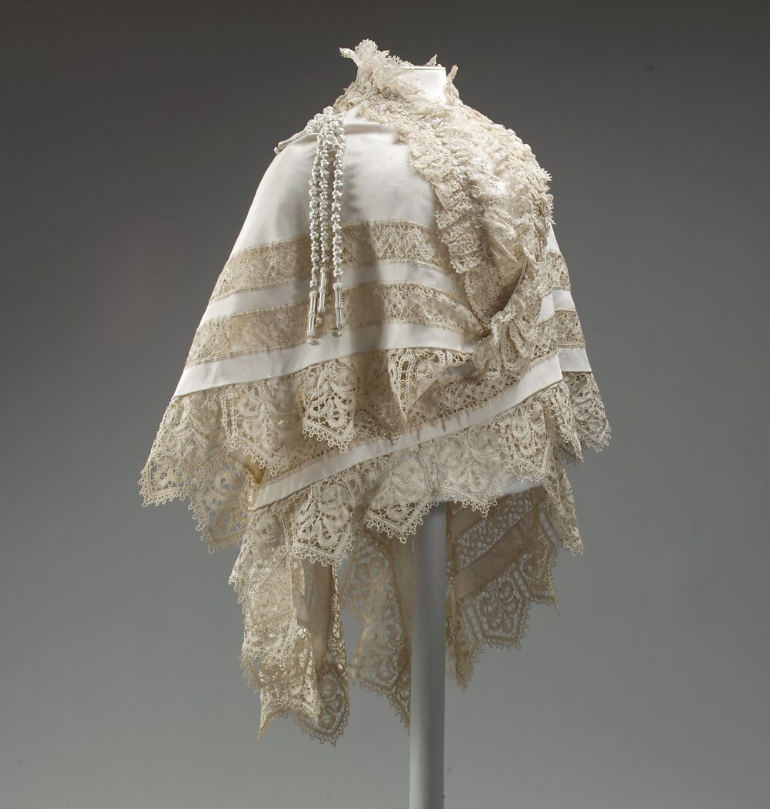
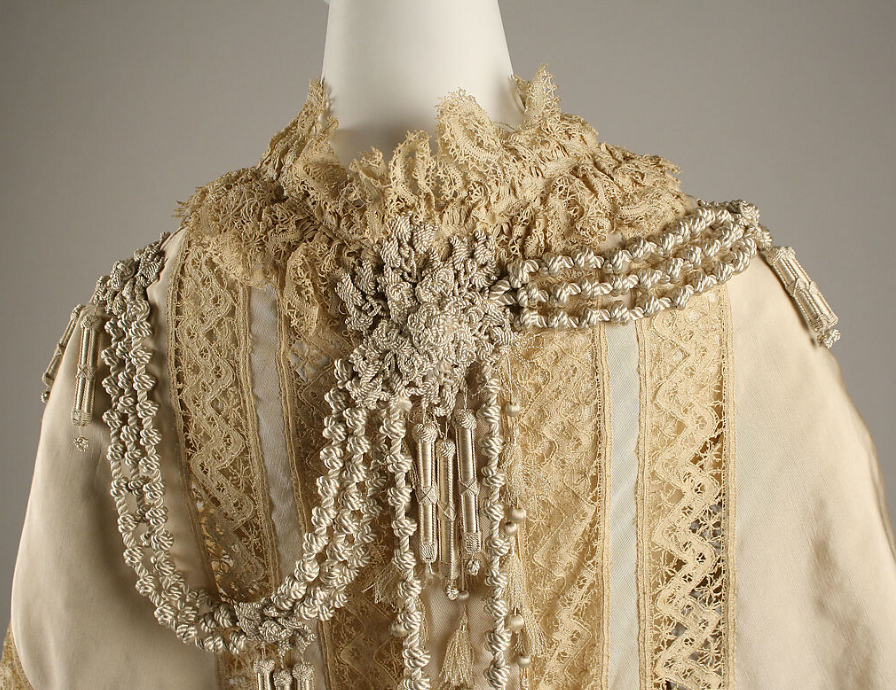
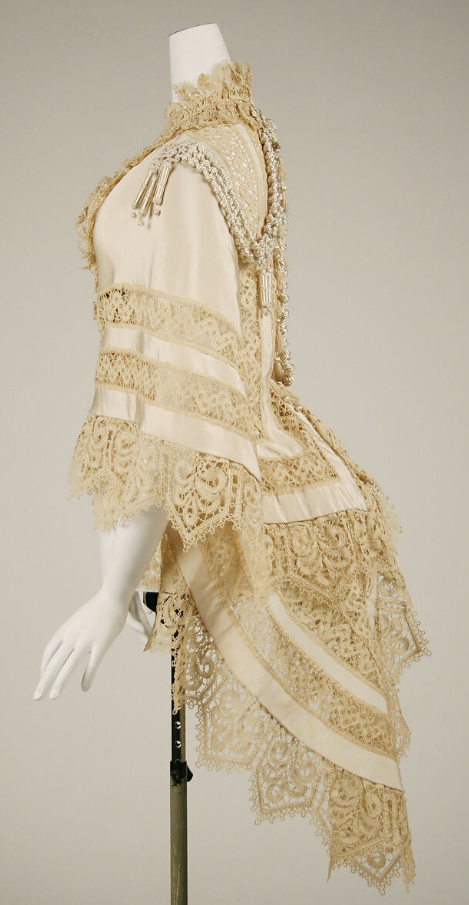
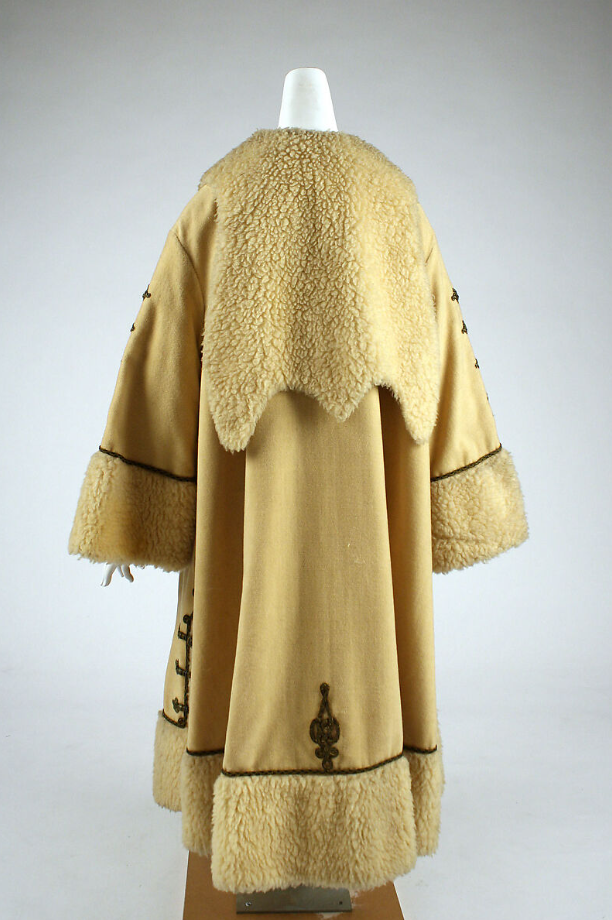
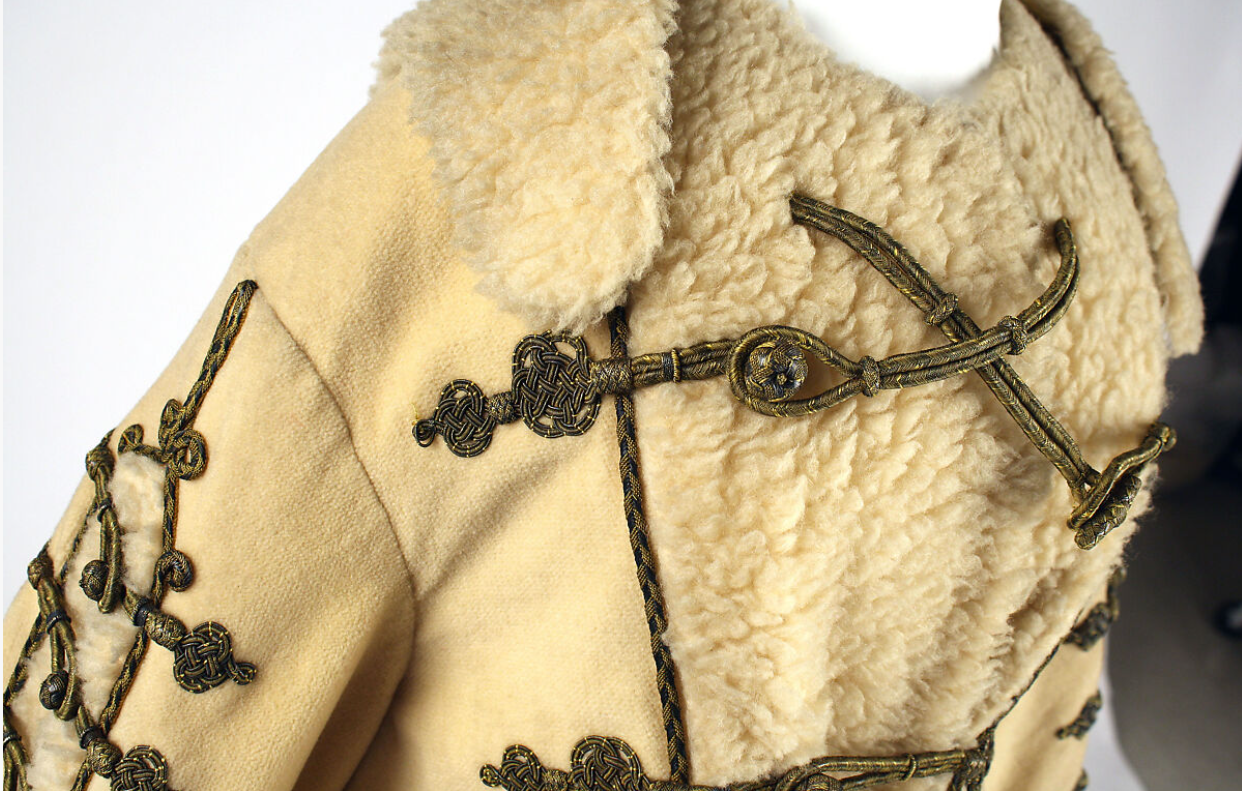
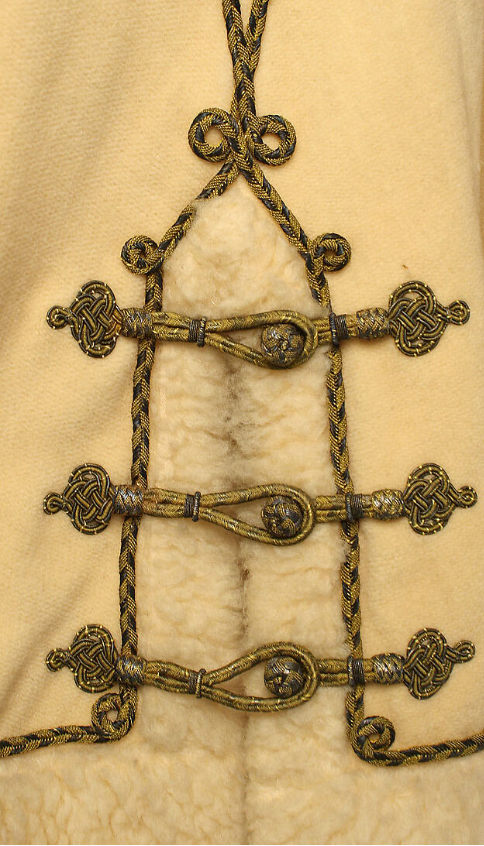
Other examples of the craftsmanship in her trousseau can be seen below. The first is a mantle made by Jays Ltd (London). It is of white faille silk with insertions and vandyke borders of guipure lace; trimmed with silk cording at the neck. The second, a lambswool driving coat, with wide borders and deep collar of white lambswool; trimmed with gold braid and frogs, and lined in light yellow taffeta.



© The Metropolitan Museum of Art
As for the wedding dress; initially, she was gifted with a beautiful gown of Brussels lace by King Leopold I of the Belgians, who was Queen Victoria’s uncle. However, as with her own wedding, the queen was insistent that the dress should be British made. So the commission was given to Mrs James, an established court dressmaker from Belgravia, London.
The dress was made of ivory silk satin (from Spitalfields), and was trimmed with orange blossoms, myrtle, puffs of tulle and four deep, Honiton lace flounces. It also had a 21 foot train made of silver moiré, that was carried by Alexandra’s eight bridesmaids. The flowers that adorned the dress and made up Alexandra’s headdress were artificial; a sprig of which was saved carefully by Queen Victoria.
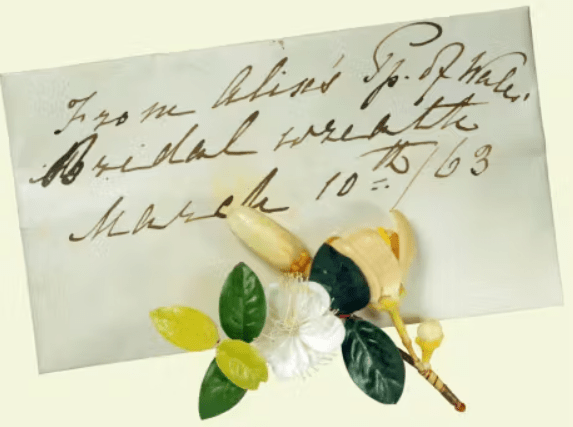
The Honiton lace was the responsibility of Messrs. John Tucker and co of Branscombe, Devon, and the lace design was the work of Miss Mary Tucker, daughter of the family. The pattern consisted of festoons of cornucopia, filled with rose, shamrock, and thistle. As well as the dress, the lace pattern was used for Alexandra’s veil, and also as trimming on her train.
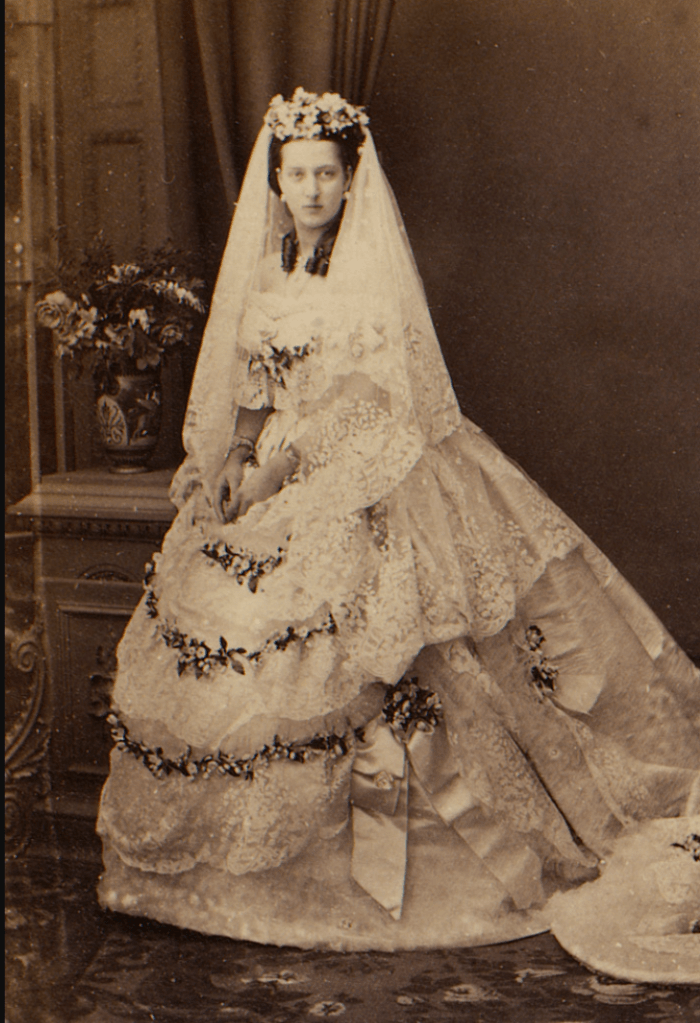
The Court Circular at the time gave a vivid and detailed description of the bride’s attire:
“The dress of the Princess Alexandra was a petticoat of white satin trimmed with chatelains of orange blossoms, myrtle, and bouffants of tulle with Honiton lace; the train of silver moiré antique trimmed with bouffants of tulle, Honiton lace and bouquets of orange blossom and myrtle; the body of the dress trimmed to correspond. Her Royal Highness wore a veil of Honiton lace, and a wreath of orange blossom and myrtle. The necklace, earrings, and a brooch of pearls and diamonds, which were the gift of H.R.H. the Prince of Wales; riviere of diamonds, given by the Corporation of London; opal and diamond bracelet given by the Queen; diamond bracelet given by the ladies of Leeds; and an opal and diamond bracelet given by the ladies of Manchester.
The bouquet was composed of orange blossoms, white rosebuds, lilies of the valley, and rare and beautiful orchideous flowers, interspersed with sprigs of myrtle, sent specially from Osborne by command of the Queen; the myrtle having been reared from that used in the bridal bouquet of H.R.H. the Princess Royal. The bouquet was supplied by Mr. J. Veitch. The lace for the wedding dress of H.R.H. the Princess Alexandra was of Honiton manufacture, and was designed and executed by Messrs, John Tucker and Co. of Branscombe, near Sidmouth. It was composed of four deep flounces of exquisite fineness, nearly covering the dress, with lace for the train; veil and pocket-handkerchief en suite. The design (made by Miss Tucker) is a sequence of cornucopia, filled with rose, shamrock, and thistle, arranged in festoons, and interspersed with the same national floral emblems. Too much praise cannot be given to Messrs. Tucker and Co. for their skill and attention in the execution of this order.”
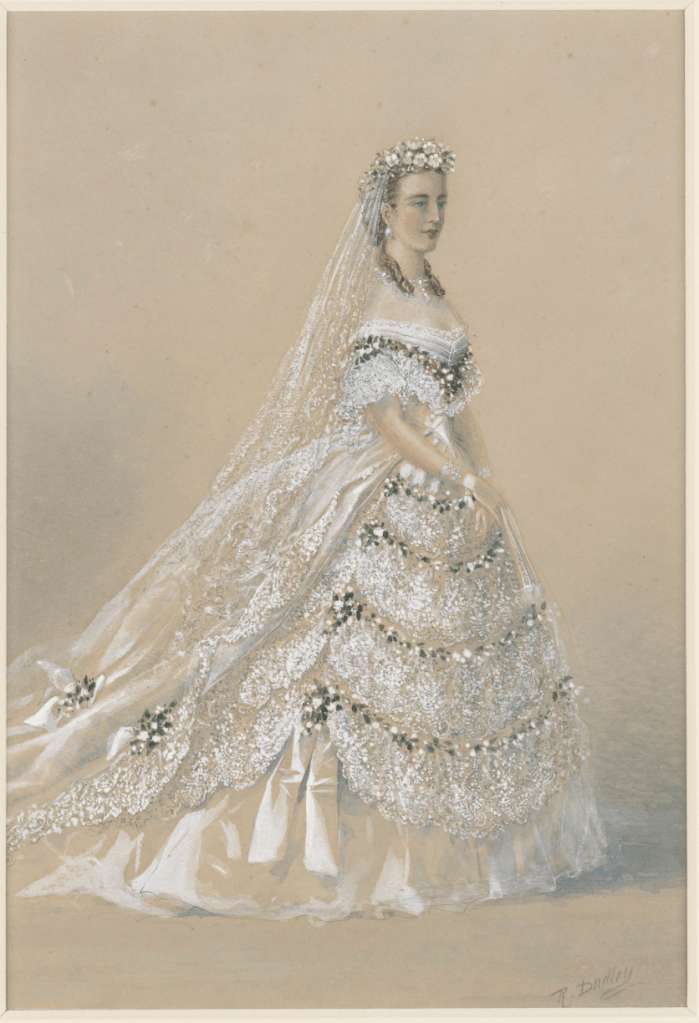
Soon after the wedding, Alexandra had the gown altered by dressmaker Madame Elise and remade into an evening dress – perhaps a reflection of her frugal upbringing and relatively modest trousseau. As a result, the gown in the Royal Collection looks very different from contemporary descriptions and images: the bodice’s lace flounce survives, but the skirt flounces are gone, and the present skirt appears to have been fashioned from the original train. The alterations were done so quickly that when the artist William Frith, commissioned to paint the official wedding scene, asked to see the dress again for accuracy, he was told it had already been changed. Forced to rely on photographs, he called it “the most unsatisfactory process.”

One final interesting fact about the dress comes from Dr Kate Strasdin, who examined the dress extensively as part of her research for Inside the Royal Wardrobe: A Dress History of Queen Alexandra. She noted that “a broad band of roughly cut lace had been attached to the centre front interior lining of the skirt. It was not a length of the Honiton lace which was so profuse elsewhere on the dress, but was rather a band of fine Brussels lace, distinct by its stylised flower motifs.” With no obvious purpose to this piece of lace, we can speculate (although we can never be sure) that this is a part of the gown she was gifted but not allowed to wear – perhaps a small act of rebellion on her part against her mother-in-law’s strictures.
Queen Alexandra’s wedding dress is a stunning piece of history. Do you have a favourite royal wedding gown? Or is there another bridal look you’d love me to explore? Let me know in the comments! And if you enjoy royal fashion history, don’t forget to subscribe for more.