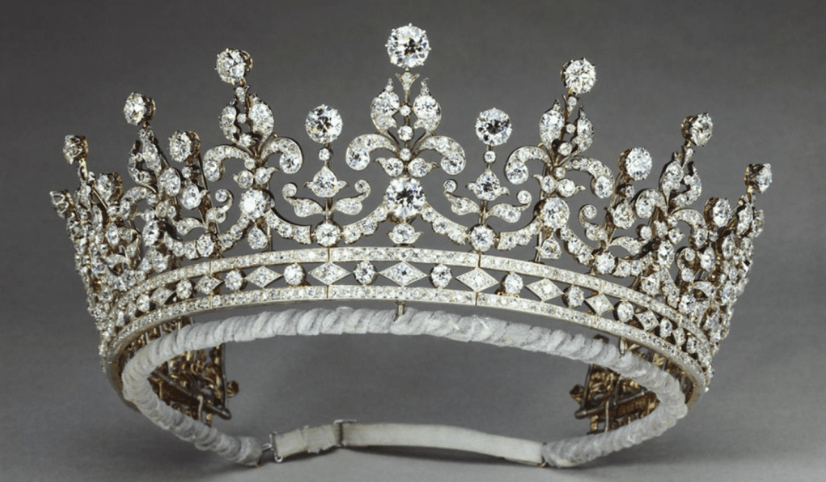
Some royal jewels sparkle; others come to define an era. The Girls of Great Britain and Ireland Tiara belongs firmly in the latter category.
It has graced three queens, appeared on banknotes and coins across the Commonwealth, and become so entwined with the image of Elizabeth II that it is almost impossible to picture her without it. Yet its story begins not with a monarch, but with a group of determined young women who set out to give a royal princess a wedding gift worthy of her future.
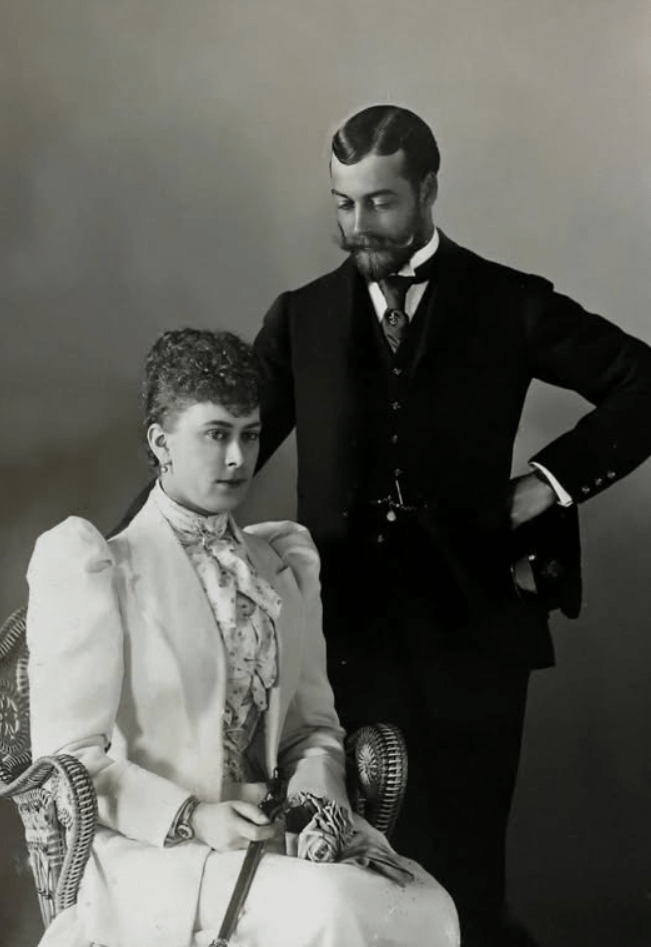
In 1893, as Princess Victoria Mary of Teck readied for her wedding to Prince George, Duke of York, a committee of women from across Great Britain and Ireland assembled. Led by Lady Eva Greville, daughter of the 4th Earl of Warwick and later one of Mary’s ladies‑in‑waiting, they launched a fundraising campaign to present the bride with a worthy and beautiful gift.
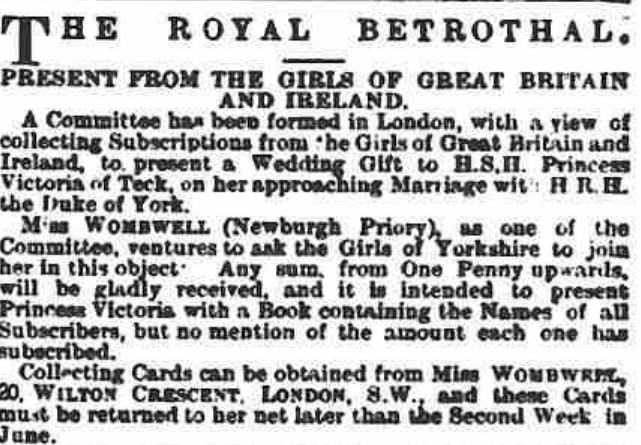
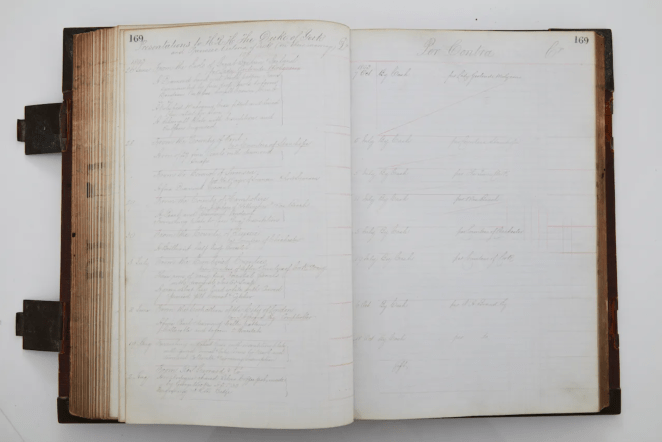
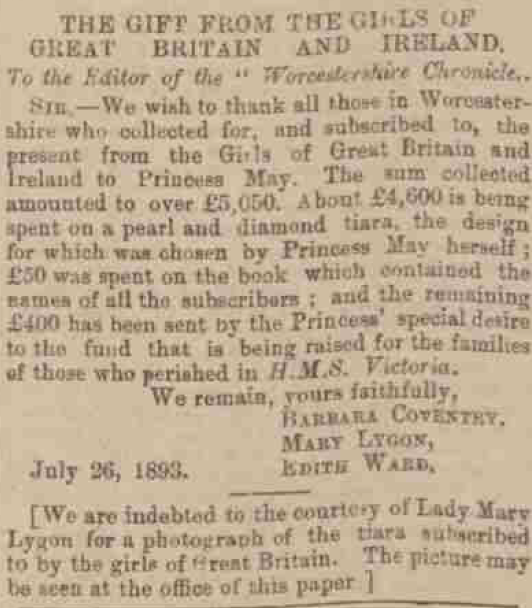
Adverts were placed in regional newspapers across the British Isles inviting local girls to donate any sum from ‘One Penny upwards’. A sum of just over £5050 was raised, a testament to the popularity of the young royal couple. Of this, £4,600 was spent on a “pearl and diamond tiara,” a design Princess May chose herself. An entry in Garrard’s Royal Ledger dated 26th June, 1893 records the commission succinctly: “A diamond band and scroll pattern tiara surmounted by fine drop pearls.”
An accompanying book was produced at a cost of £50, bearing the name of all subscribers, and, at the behest of the princess, the remaining funds of almost £400 were donated to a fund supporting the families of those killed in the HMS Victoria disaster.
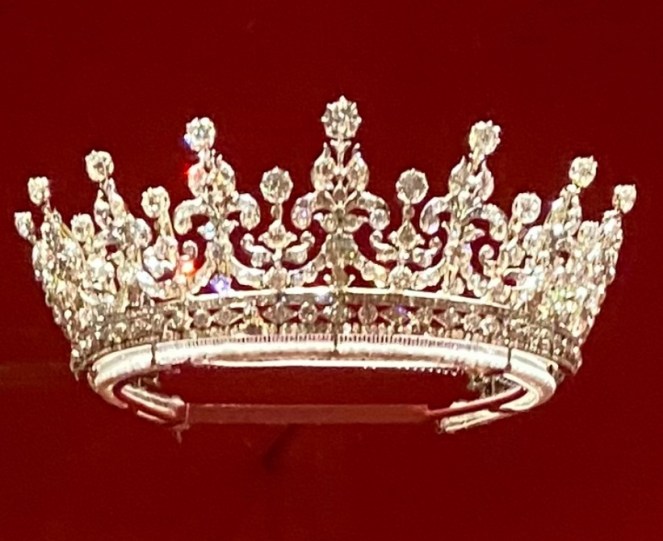
The tiara Garrard delivered was a masterpiece of late‑Victorian design. Leslie Field, in The Queen’s Jewels, described it as “a festoon‑and‑scroll with nine large oriental pearls on diamond spikes and set on a base of alternate round and lozenge collets between two plain bands of diamonds.” It was also transformable, a hallmark of Garrard’s ingenuity, and could be worn as a tiara, a coronet, and a necklace.
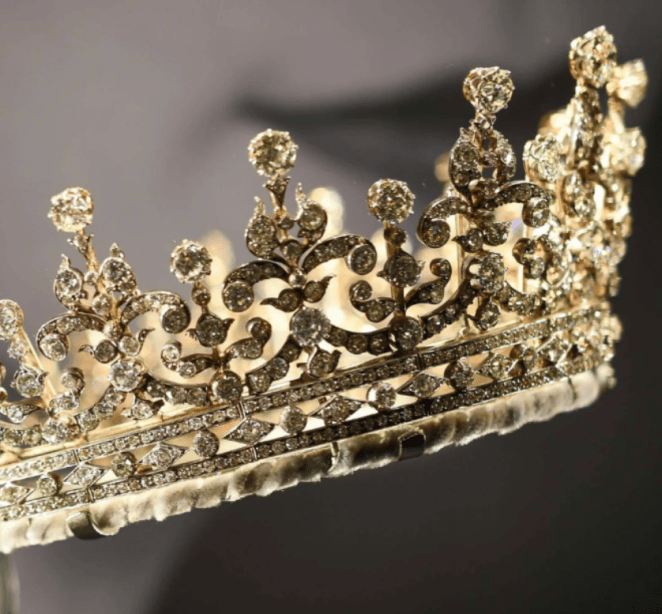
This versatility made it fashionable as well as functional. The openwork design gave it lift without heaviness, and the pearls softened the sparkle, making it flattering in photographs and flattering on the wearer.
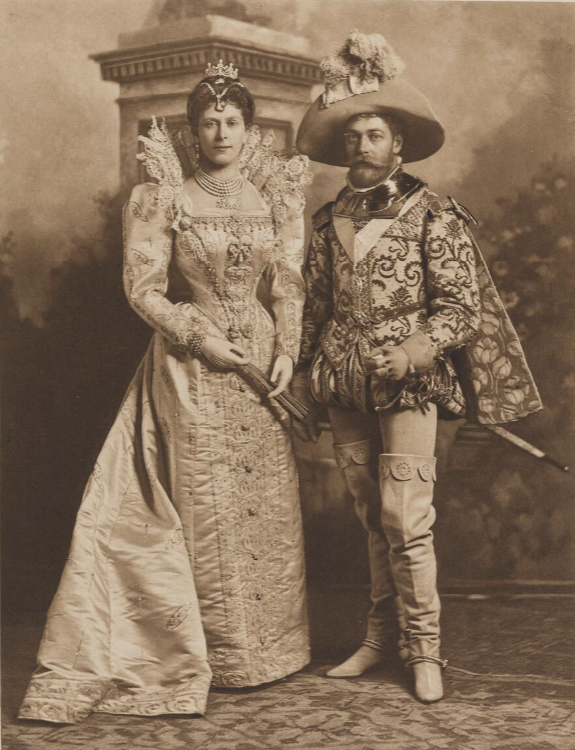
Mary wore the tiara frequently in the early years of her marriage, including:
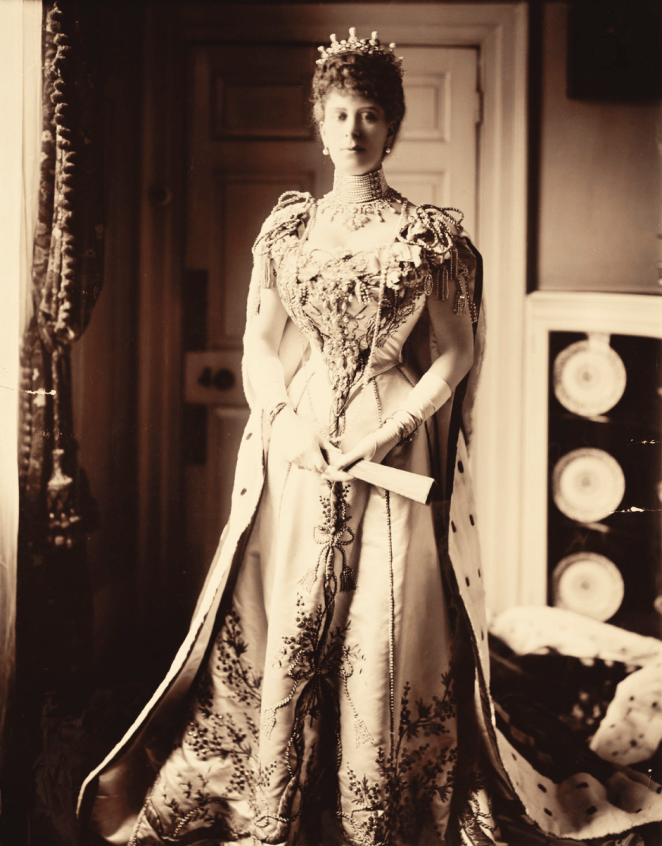
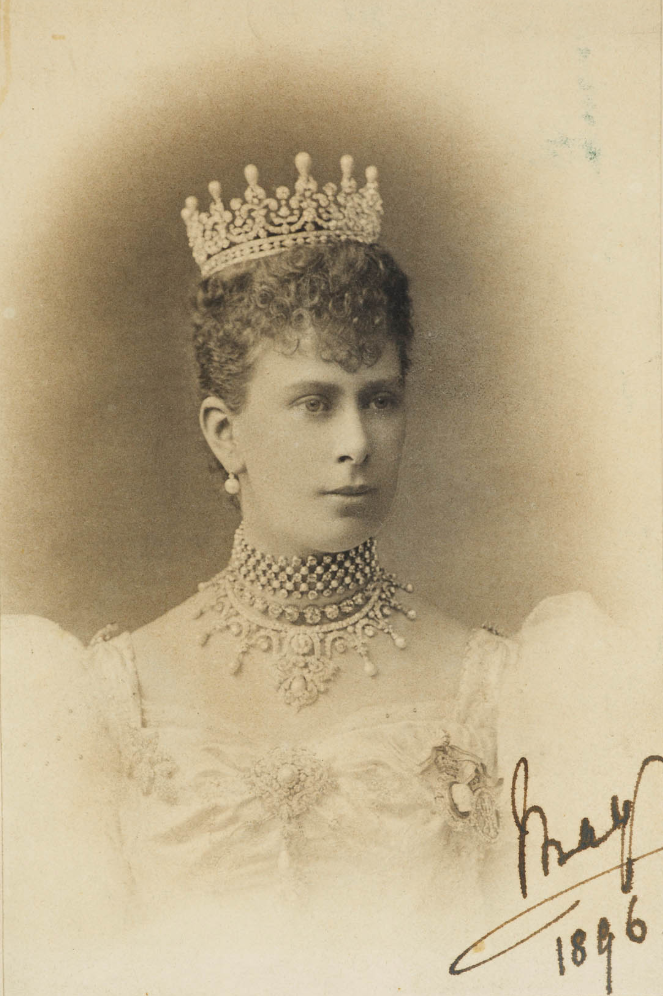
When Princess May became Queen Mary in 1910, her passion for jewellery – and for altering it – became legendary. In 1914, she sent the tiara back to Garrard for significant alterations. She had them remove the baroque pearls and replace them with diamonds – taken from the Surrey Fringe Tiara, which had been another wedding gift to her. She also had them separate the base of the tiara which allowed it to be worn independently as a bandeau.
The removed pearls were repurposed into the now‑famous Lover’s Knot Tiara.
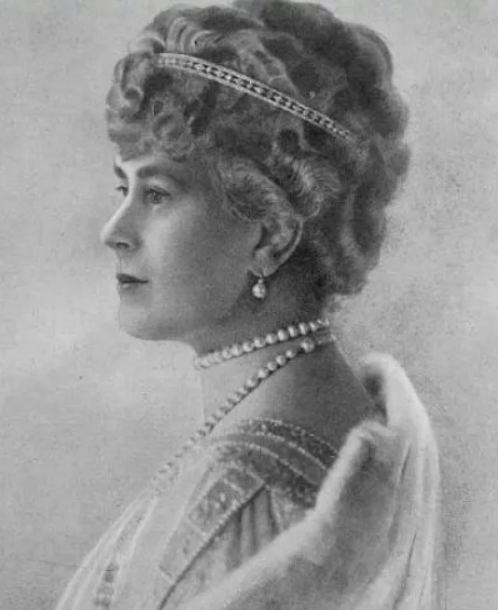
By the 1920s, as Mary’s jewellery collection expanded even further with pieces like the Vladimir Tiara and Queen Alexandra’s Kokoshnik, she wore the Girls of Great Britain and Ireland Tiara less often, but it remained special to her.
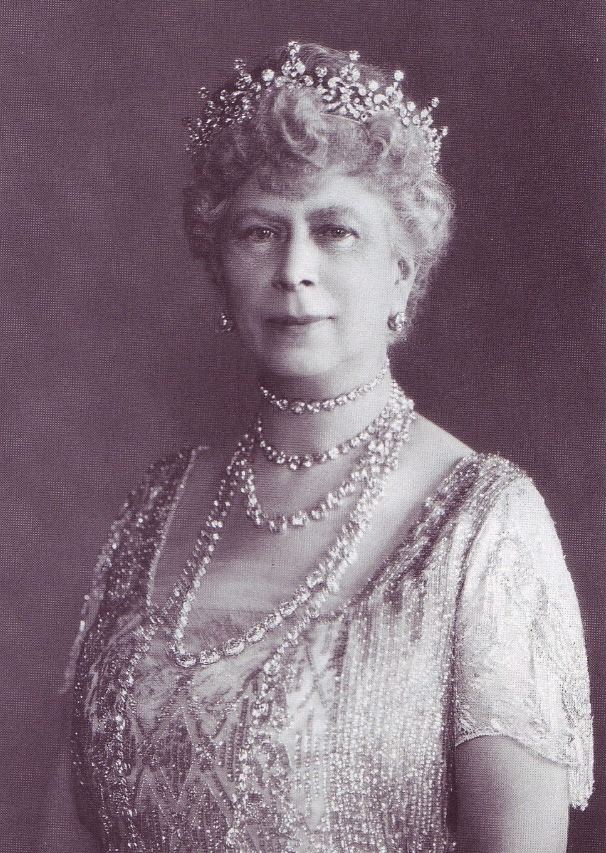
In 1947, Queen Mary passed the tiara to her granddaughter Princess Elizabeth as a wedding present. The gifts were displayed at St James’s Palace, and photographs from the exhibition show that the tiara still included its detachable bandeau base.
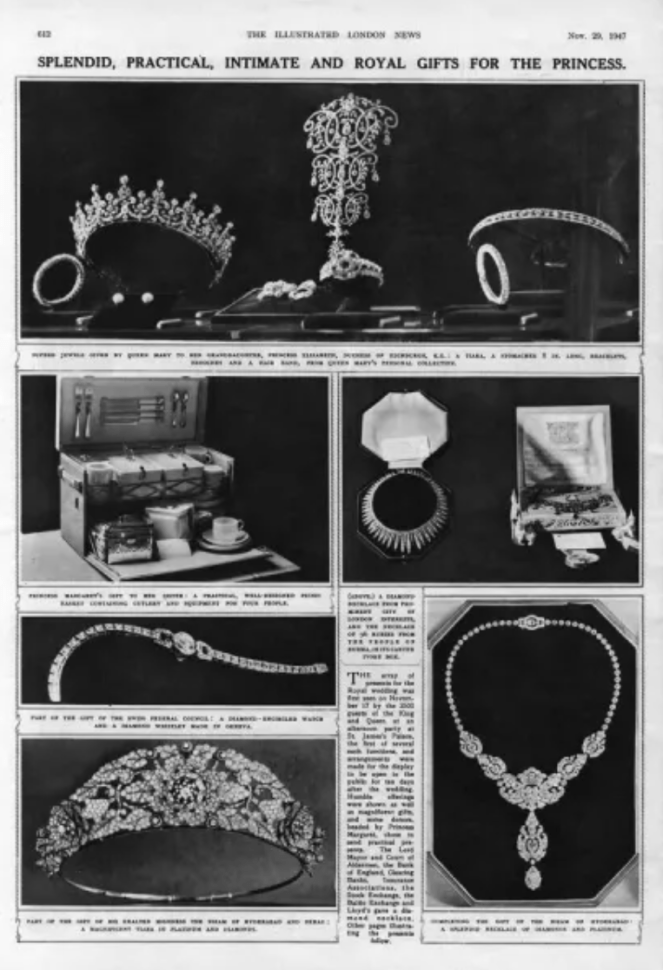
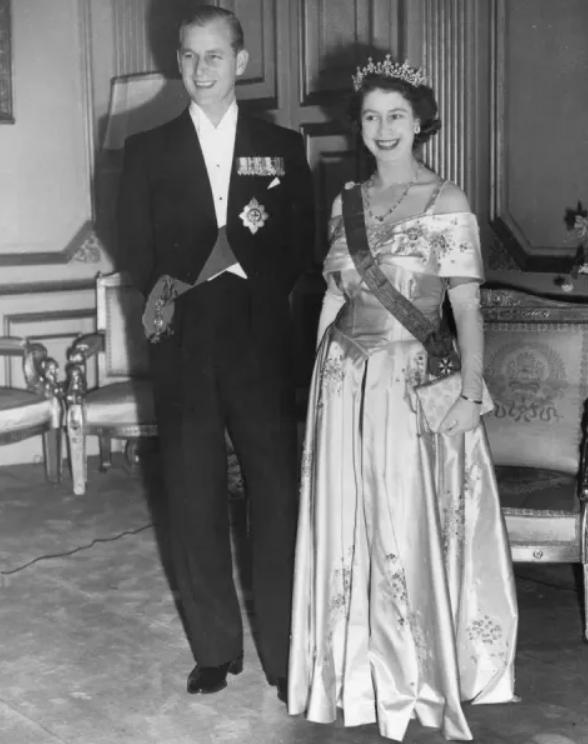
Elizabeth affectionately called it ‘Granny’s tiara’ and it quickly became one of her favourites. One of her earliest appearances in it was during an official visit to France in May 1948, at the Paris Opera House.
In 1951, she wore the tiara for her 25th‑birthday portrait, her last before becoming Queen. Then Princess Elizabeth, she was pictured wearing a grey silk gown, the tiara, and a pearl necklace.
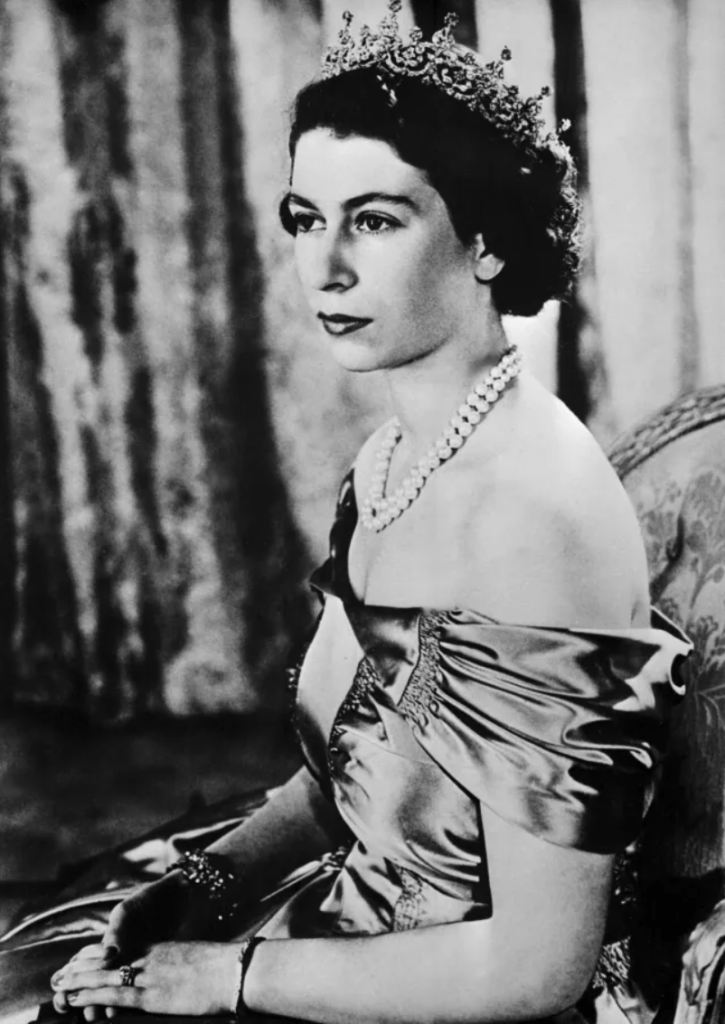
In 1952 she sat for her first official portrait as monarch. Photographed by the first woman to be appointed official Royal Photographer, Dorothy Wilding, the young queen chose to wear ‘Granny’s Tiara’ for the images that would soon become the defining image of the early Elizabethan age.
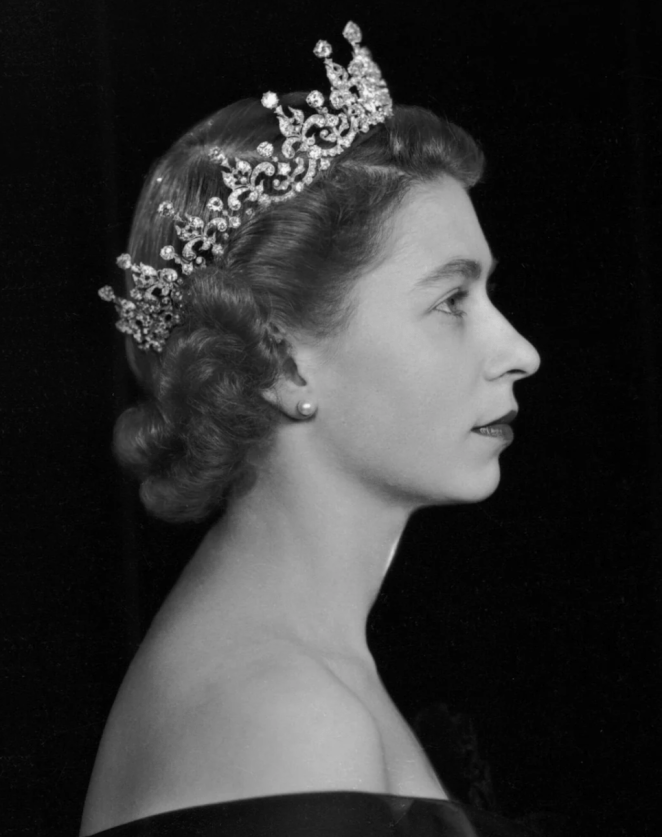
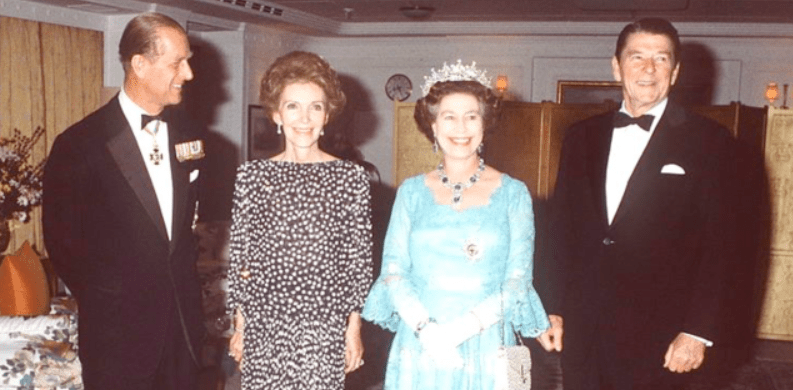
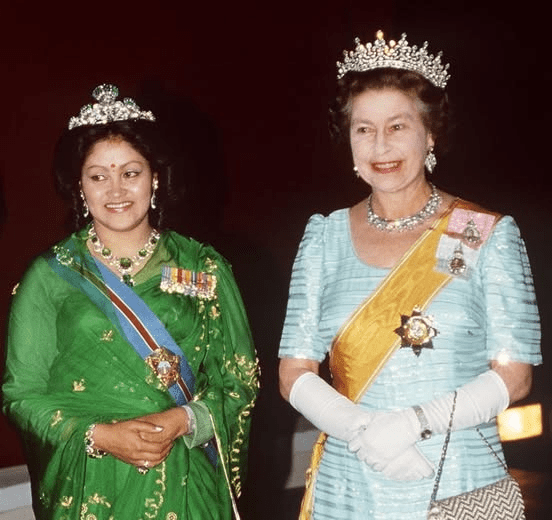
Over the next seven decades, the tiara became one of the most recognisable jewels in the world.
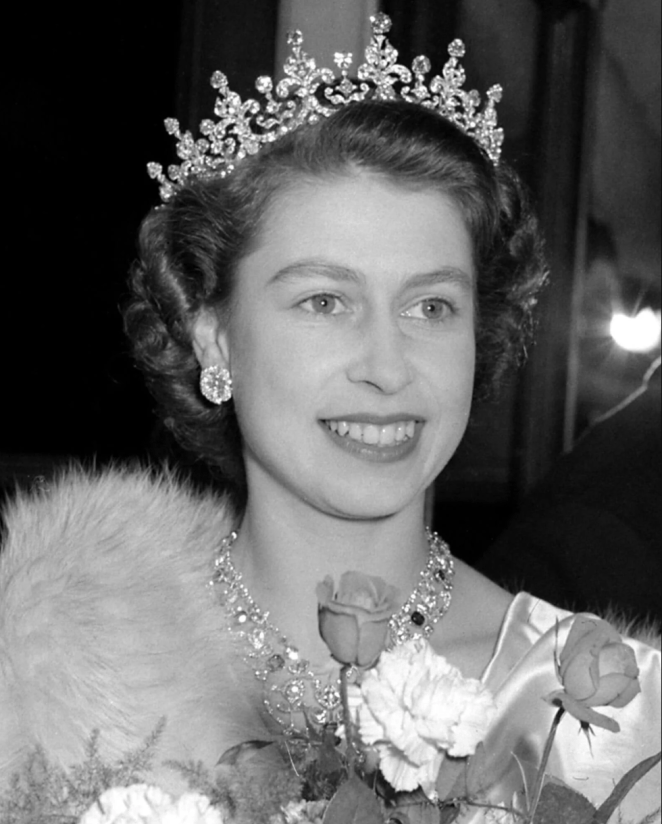
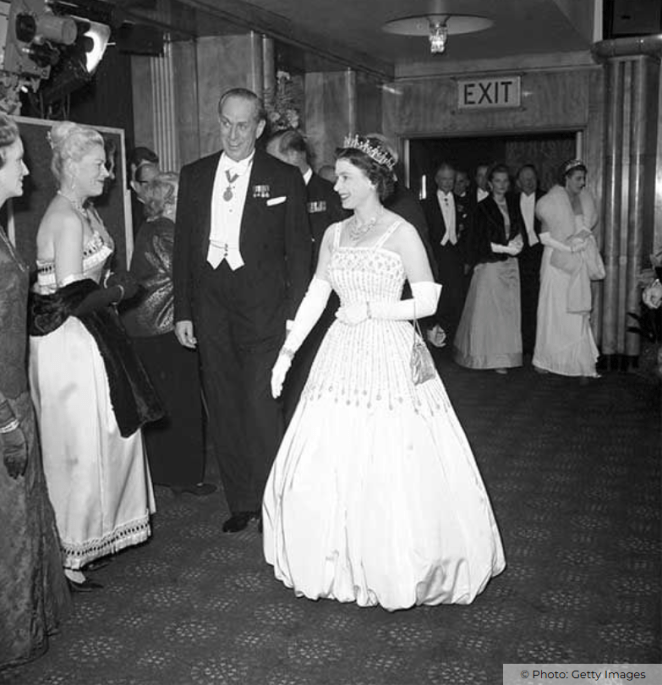
In 1962, The Queen attended the Lawrence of Arabia premiere at the Odeon Leicester Square. She paired the tiara with a beautiful Norman Hartnell evening gown, which was made from ivory Peau De Soie taffeta, embellished with diamantés, and trimmed with Duchess satin. Almost 60 years later, her granddaughter, Princess Beatrice, chose this very dress for her own wedding gown.
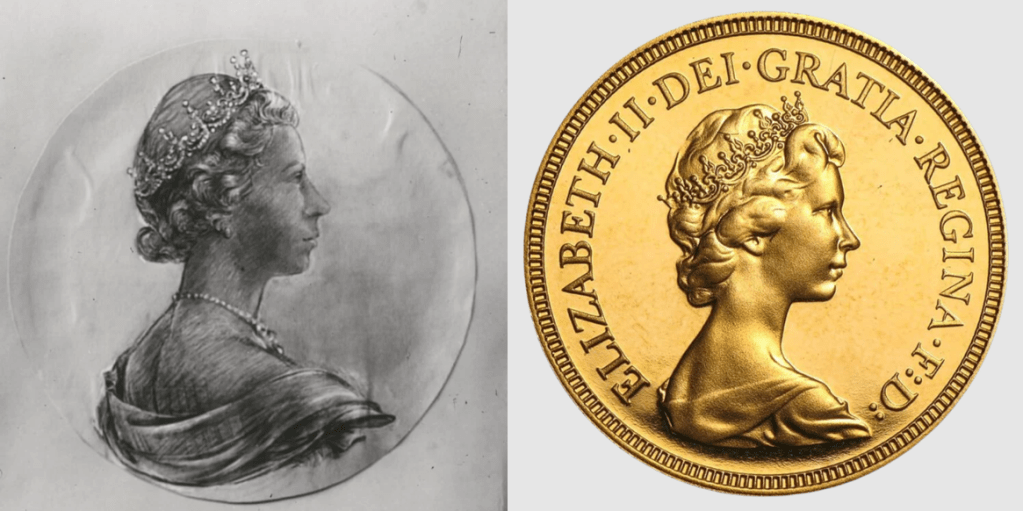
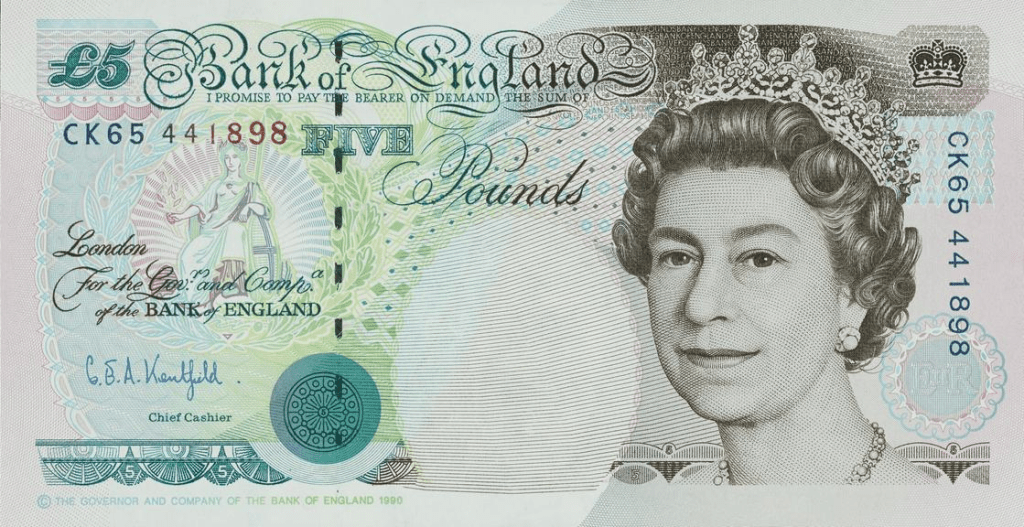
In 1968, Sculptor Arnold Machin designed the royal portrait to be used on the UK’s new decimalised currency.
Taking a leaf from her grandmother’s book, Elizabeth returned the tiara to Garrard in 1969 and asked them to reunite the tiara and its bandeau base. After that, she went on to wear it for numerous state visits, ensuring the piece remained synonymous with her reign.
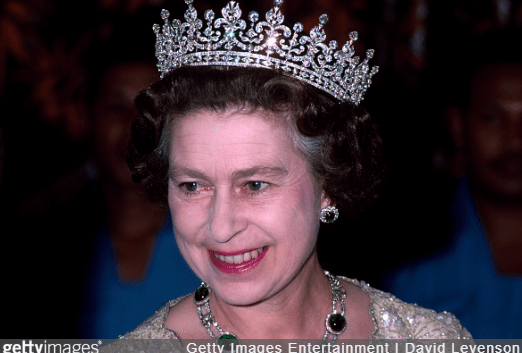
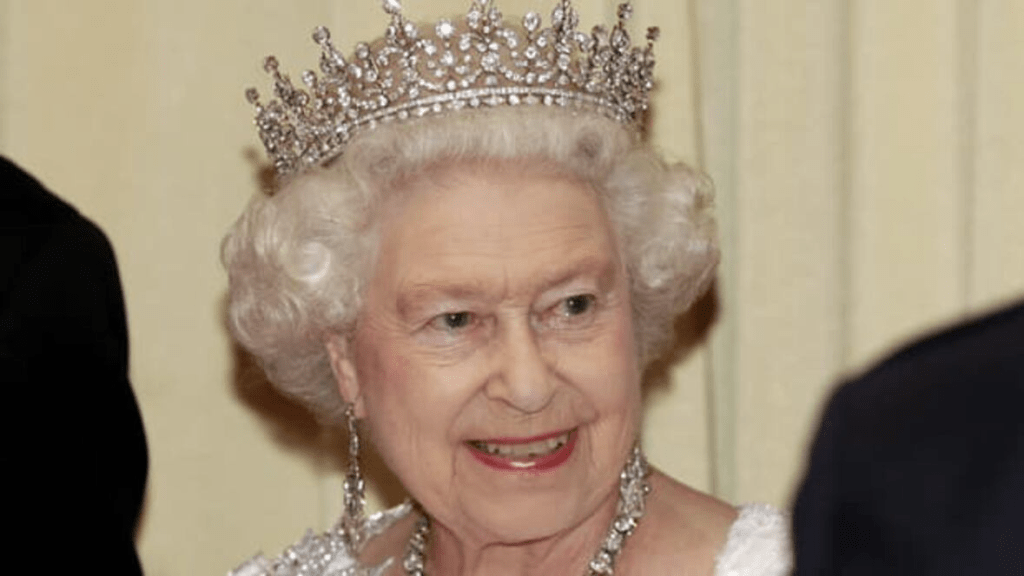
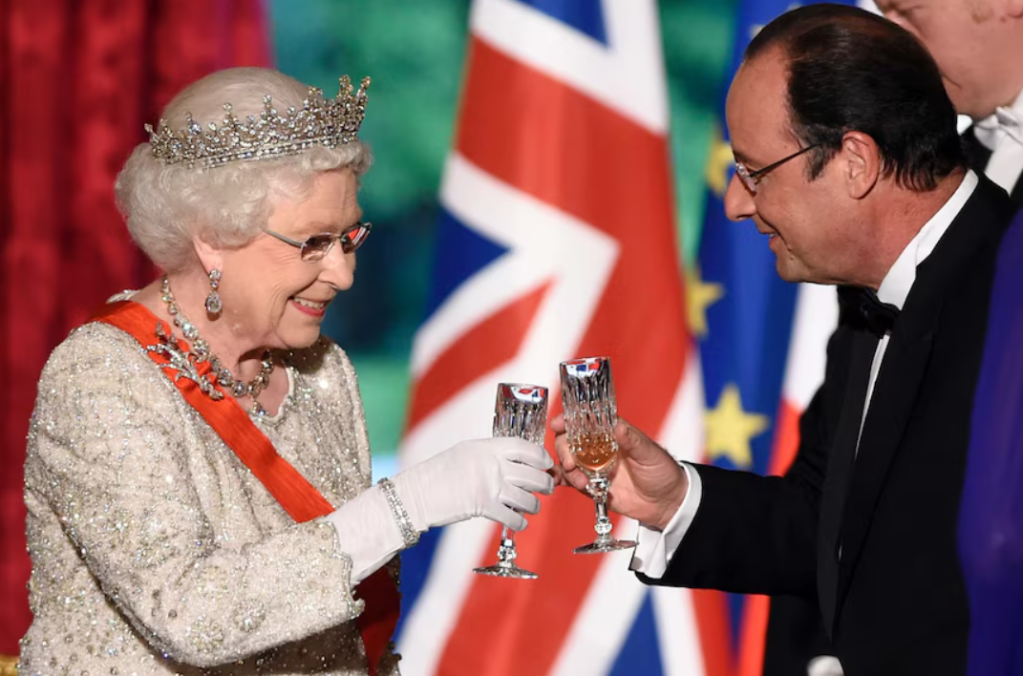
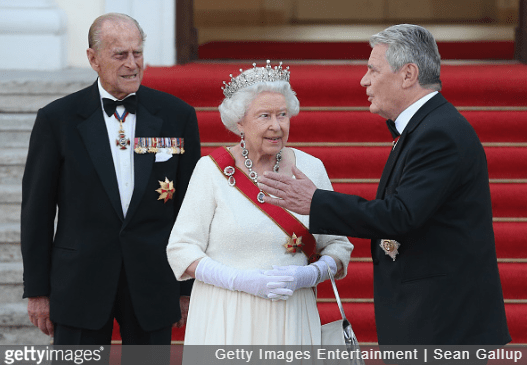
In 2015 Queen Elizabeth II made what turned out to be her final state visit abroad, when she visited Germany. It seems fitting that such a poignant occasion was accompanied by ‘Granny’s Tiara’.
Her last outing in this beloved piece of jewellery was on 4th December, 2018, when she hosted the annual Diplomatic Corps Reception at Buckingham Palace.
By then, it had become more than a mere jewel; it was a visual shorthand for her reign.
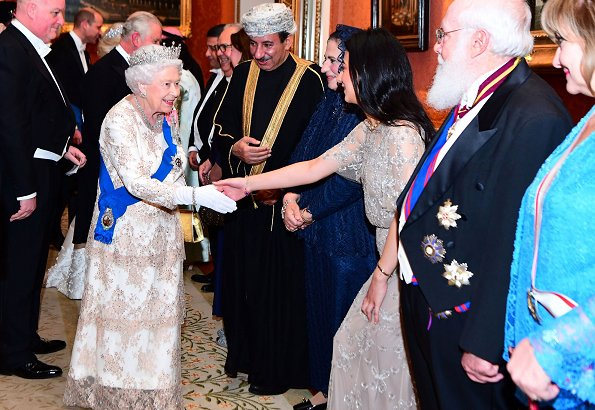
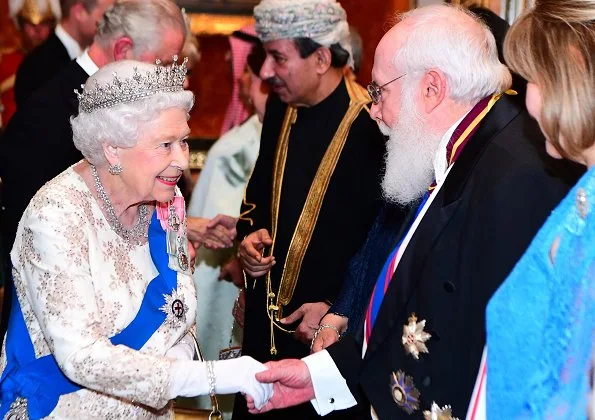
After Elizabeth II’s death in 2022, the tiara passed to Queen Camilla. She made her first appearance in it at a reception at Mansion House in October 2023, marking the beginning of a new chapter in the tiara’s long life.
Camilla wears it slightly lower, in keeping with her preference for tiaras that sit closer to the head. The effect is modern and streamlined, and the tiara’s clean lines complement her softer hairstyle.
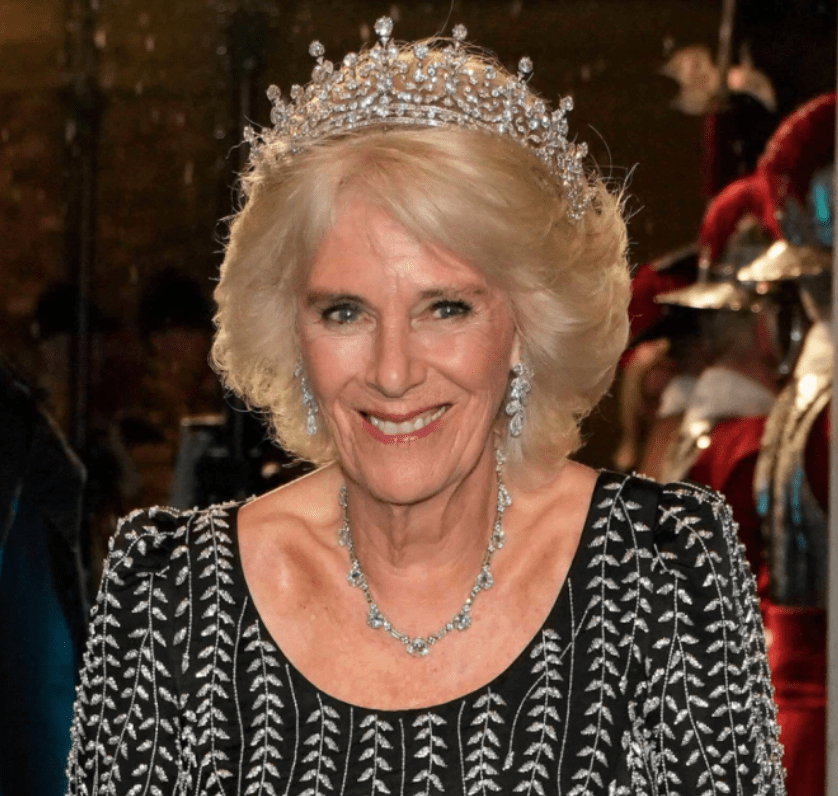
Few jewels combine history, craftsmanship, and symbolism as seamlessly as this one. As Claire Scott, Design & Development Director at Garrard, has said:
“The Girls of Great Britain and Ireland Tiara is one of Garrard’s most iconic creations, a masterpiece of design and technical versatility. Its signature Windsor motif has become a cornerstone of our design language, inspiring jewellery past and present.”
Its endurance comes from its elegant, balanced design, its deep personal associations with Queen Mary and Queen Elizabeth II, and its presence on currency, portraits, and in public memory.
It is, in many ways, the people’s tiara – born from public affection, immortalised in public imagery, and cherished by generations who saw it as part of their Queen’s identity.

 Mistress of the Robes