
Of all the stunning tiaras in the royal vault, there was one which Queen Elizabeth II favoured above all the others. The Vladimir Tiara is one of the most iconic and fascinating pieces of royal jewellery, with a storied history that spans the Russian Imperial family and the British monarchy.
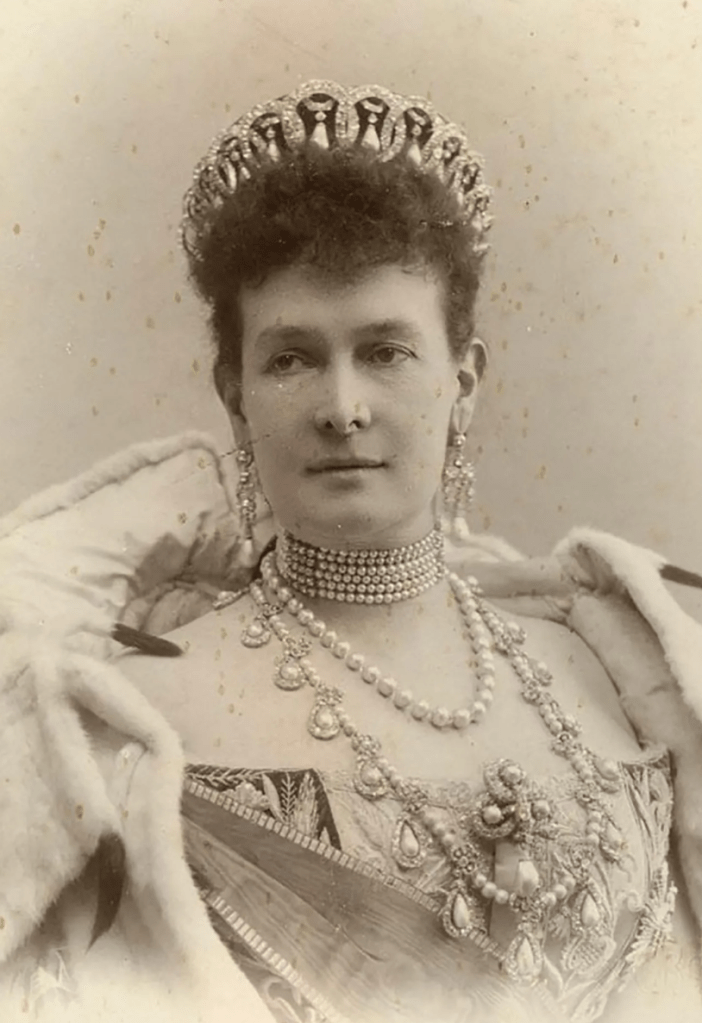
Commissioned in 1874 by Grand Duke Vladimir Alexandrovich of Russia for his new wife, Grand Duchess Maria Pavlovna, the tiara was crafted by the renowned Romanov court jeweller, Bolin. It features an intricate design of 15 intersecting circles, inlaid with diamonds, and an exquisite baroque pearl suspended in each one. The tiara also allowed a section of the framework to be removed, creating a smaller, coronet configuration (seen below). This exceptional craftsmanship came at a price, and reportedly cost the Grand Duke 48,200 Roubles.
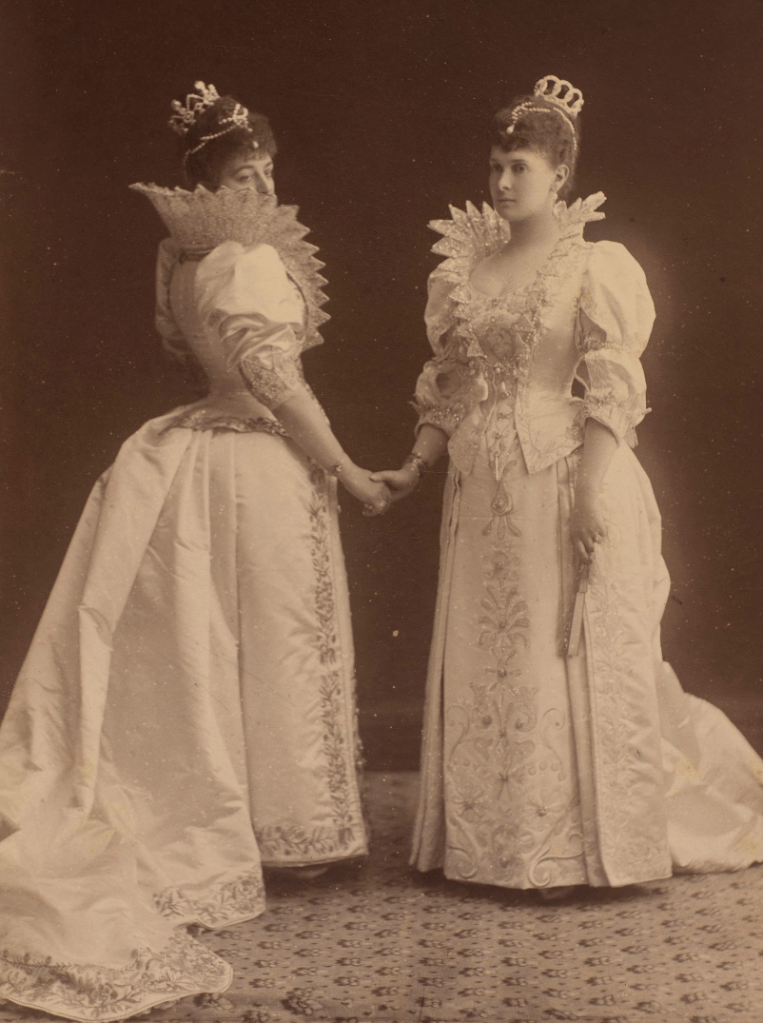
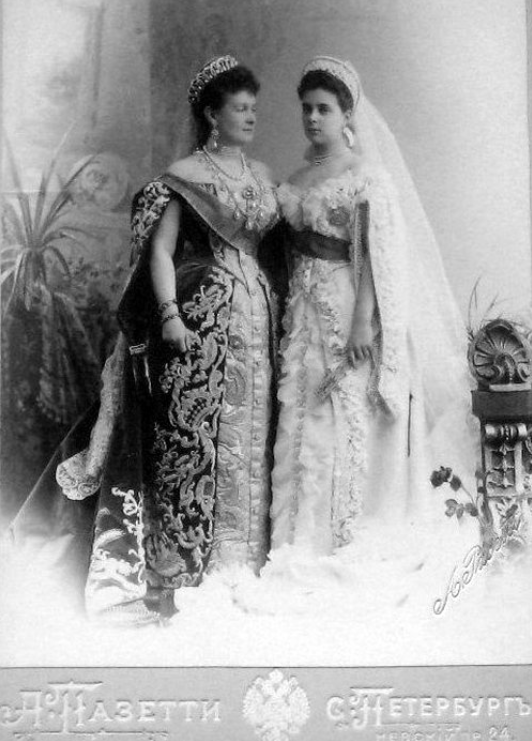
As the daughter-in-law of Tsar Alexander III, the Grand Duchess was a central figure in the glittering court of St. Petersburg, and hosted lavish salons that attracted aristocrats, artists, and intellectuals. Known for her love of opulence and exquisite taste, she had an extensive collection of jewels and was sometimes referred to as ‘the grandest of Grand Duchesses’. This further strained her already distant relationship with Empress Maria Feodorovna, which had been fraught due to Maria Pavlovna’s German origins—after all, no one enjoys being outshone!
In the turmoil after the Tsar Nicholas II’s abdication, the Grand Duchess heeded advice to leave St Petersburg, while her jewels remained in her bedroom safe at the Vladimir Palace. She remained in the country with her sons, hopeful that the Romanovs would regain power, but eventually, after a spell under house arrest, she became the last Romanov to escape Russia in Feb 1920.

Her jewels, however, made it to safety before she did, having been rescued by her son, Grand Duke Boris, and friend Albert Stopford, who was a British antiques dealer. Dressed as workmen, they carried out a daring raid on the Vladimir Palace, and smuggled 224 of her jewels out of the country, the tiara among them.
The Grand Duchess died in France in September 1920, and her jewels were divided between her children. The Vladimir tiara was inherited by her only daughter, Grand Duchess Elena Vladimirovna, or Princess Nicholas of Greece & Denmark as she was commonly known after her marriage. (Elena’s daughter, Princess Marina, subsequently married Prince George, Duke of Kent.)
As part of the exiled Greek royal family, Princess Nicoholas put a number of items up for sale in 1921 to provide much needed funds. Queen Mary, who was famed for her love of jewels, bought the tiara, along with a diamond riviere, for the sum of £28,000.
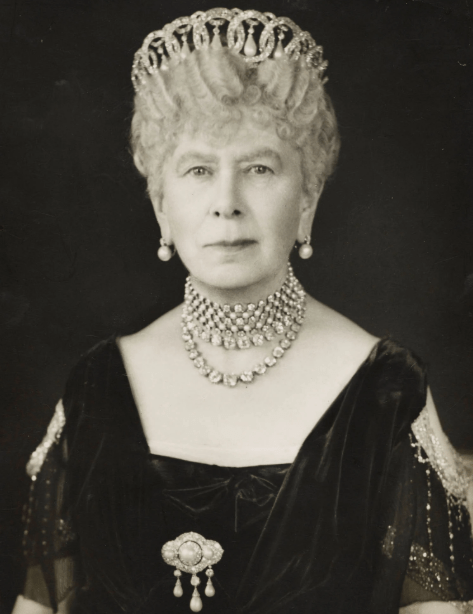
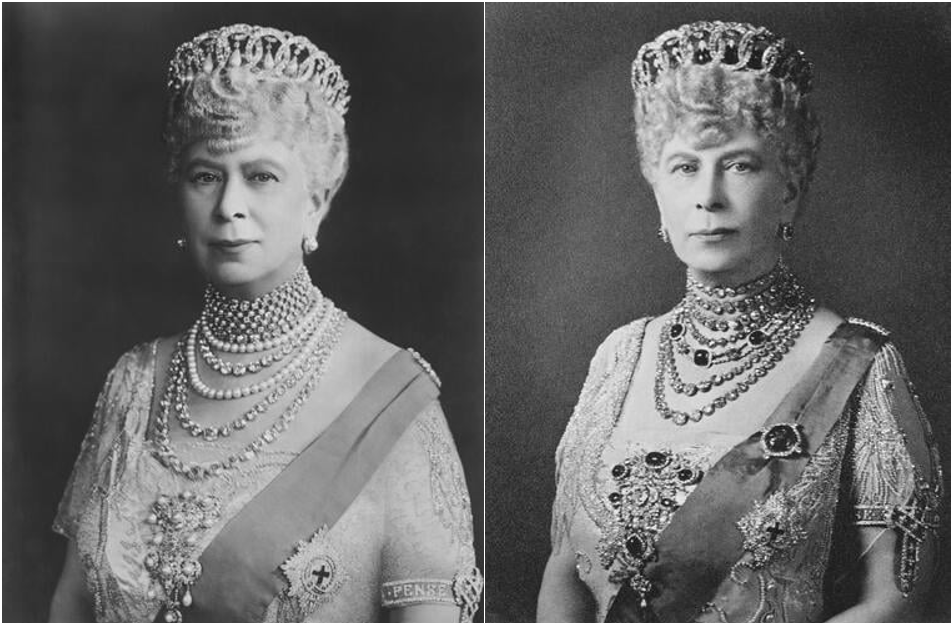
Soon after her purchase, Queen Mary entrusted the tiara to royal jewellers, Garrard, to repair the damage caused during the flight from Russia. And then, three years later, she had them work on the piece again, adding in a mechanism that allowed her to easily switch out the pearls for fifteen emeralds from her own collection.

Known as the ‘Cambridge Emeralds’, these stones had an interesting story of their own, having been won in a lottery by Mary’s grandmother, Augusta, Duchess of Cambridge. Her prize, some 40 cabochon emeralds, had already been incorporated into various pieces of jewellery, but the remaining stones were inherited by her daughter, Princess Mary Adelaide, Duchess of Teck (Queen Mary’s mother).
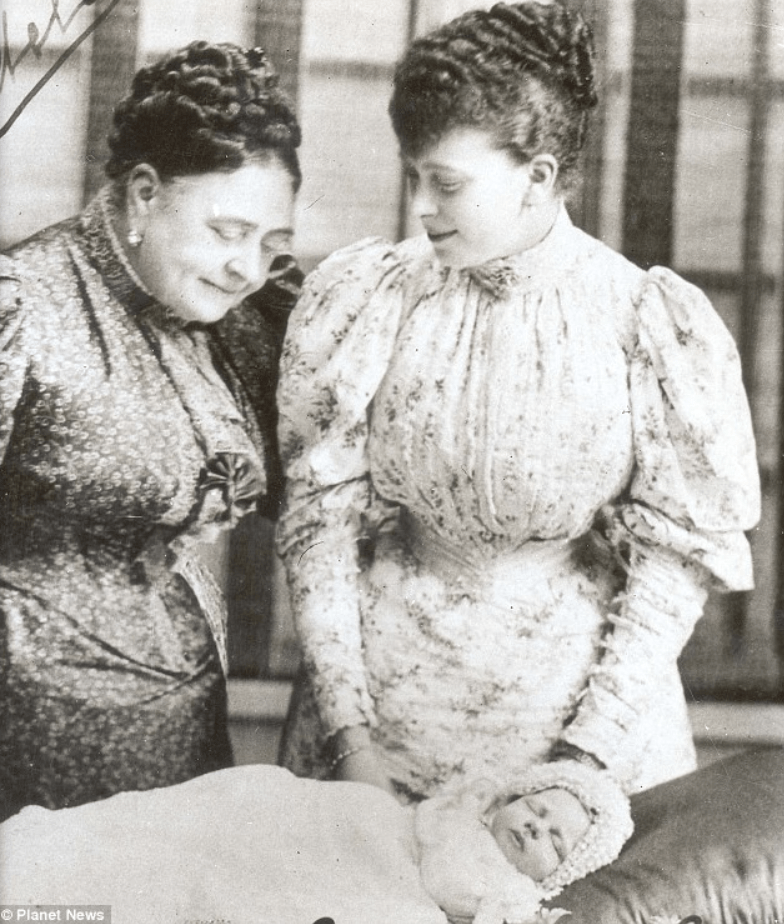
When the Duchess of Teck died intestate, her jewels were shared amongst her children, and the remaining emeralds went to her son, Prince Francis of Teck.

Francis never married, but did have a long running affair with society beauty Ellen Constance, the Countess of Kilmorey, and it was to her that he willed the emeralds, much to his sister’s outrage. Queen Mary took steps to retreive the family jewels, and in the end is reported to have purchsed them from the Countess for £10,000. She also had her brother’s will sealed to hide what had happened – however, the time limit on this ran out in 2024, and the full history of the Cambridge Emeralds was laid bare.
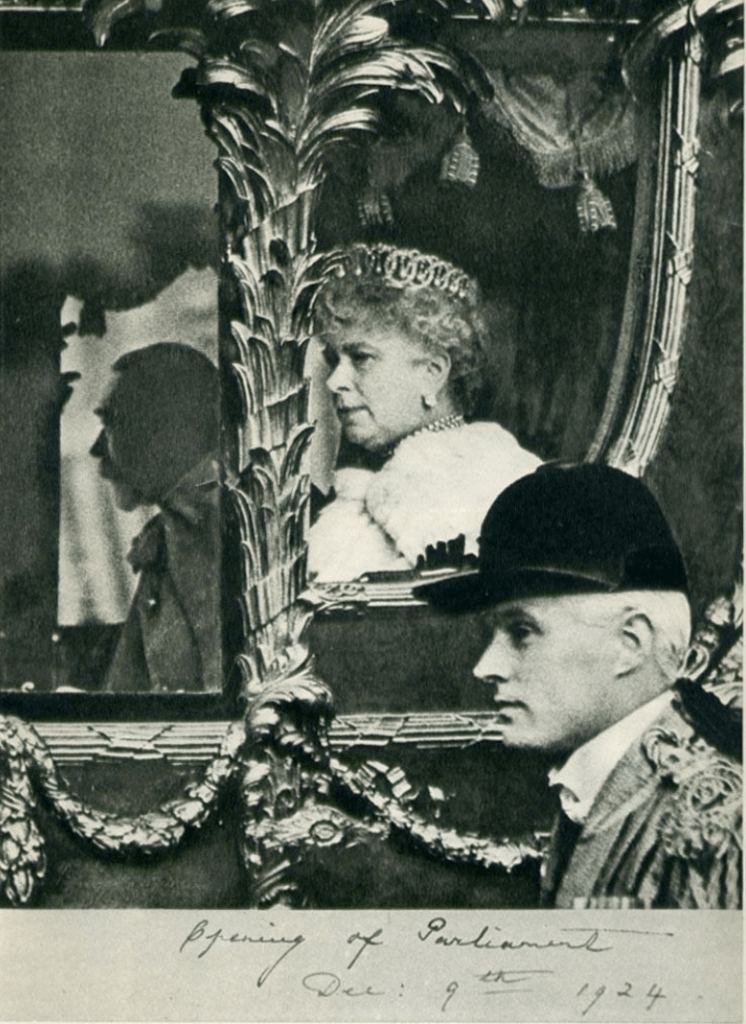
Once the alterations were complete, one of the first major occasions when Queen Mary wore her new tiara was at the State Opening of Parliament on 9th December, 1924.
It quickly became one of her favourite and most majestic tiaras, and she wore it for many official portraits.
After her death in 1953, the tiara was inherited by her granddaughter, Queen Elizabeth II.
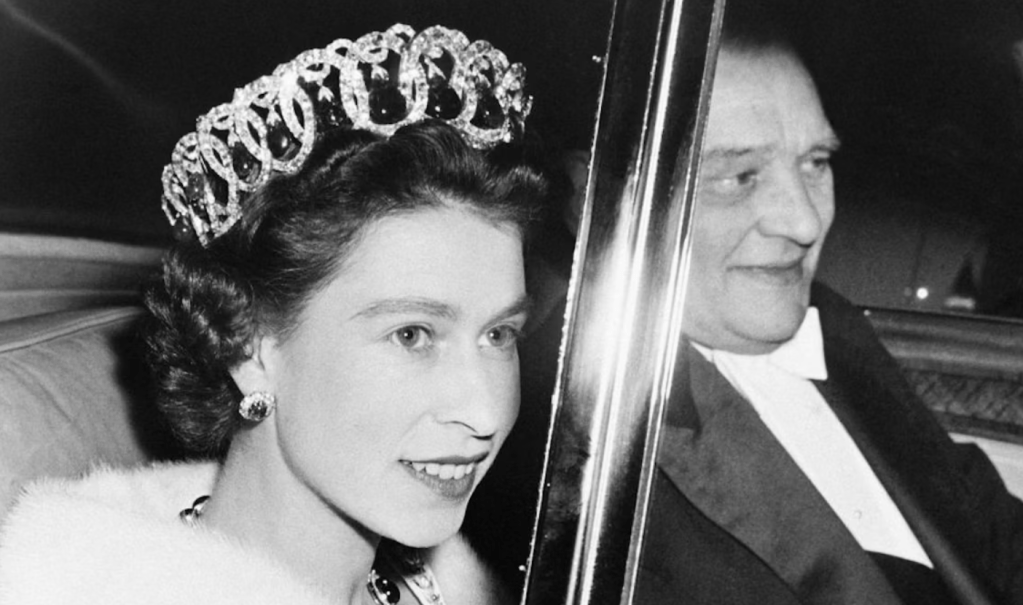
Elizabeth first wore it for the Royal Command Performance of the film, Rob Roy, at the Odeon Leicester Square on 26th October, 1953. She can be seen greeting the stars, along with Princess Margaret and the Duke of Edinburgh, in the footage below.
It quickly became one of her most cherished and frequently worn tiaras, often paired with the Delhi Durbar Parure when worn in its emerald setting, creating a striking and cohesive look.
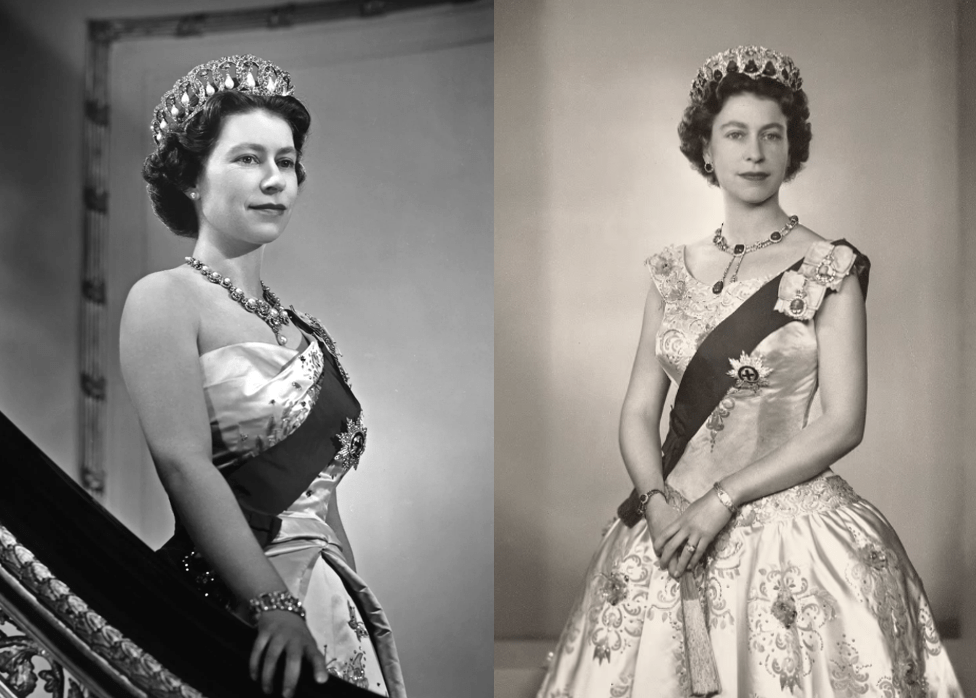
In 1988, it was once more handed over to Garrard for repair, and the gold frame was completely remade in platinum.
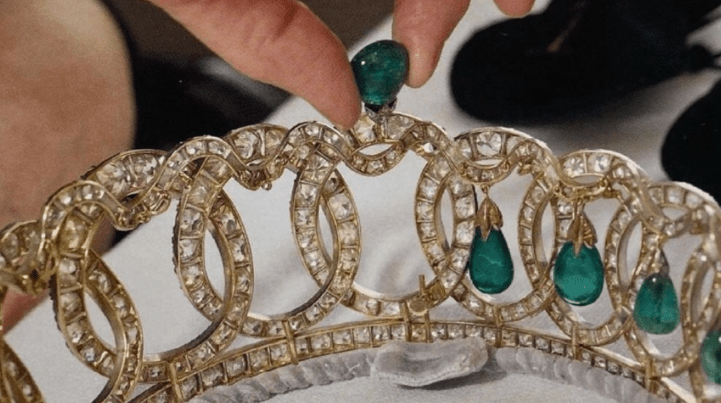
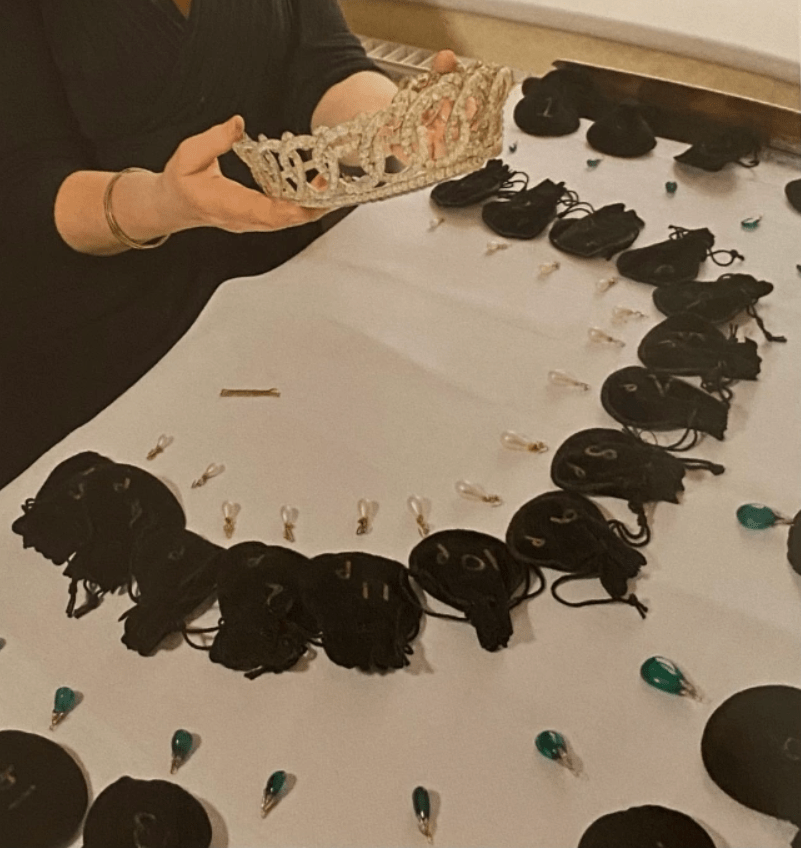
When not in use, the tiara is stored in a fitted leather case, and the jewels are kept in numbered velvet bags. In her book, The Other Side of the Coin, the Queen’s Dresser, Angela Kelly, reported that it can take up to an hour to switch the jewels out.
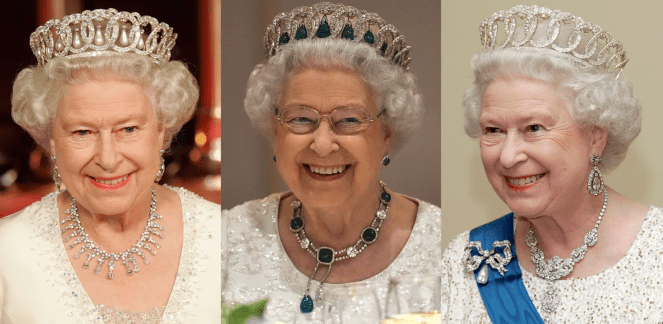
The queen continued to wear this tiara on state occasions throughout her lengthy reign. She wore it to meet Pope John Paul II in 1980:
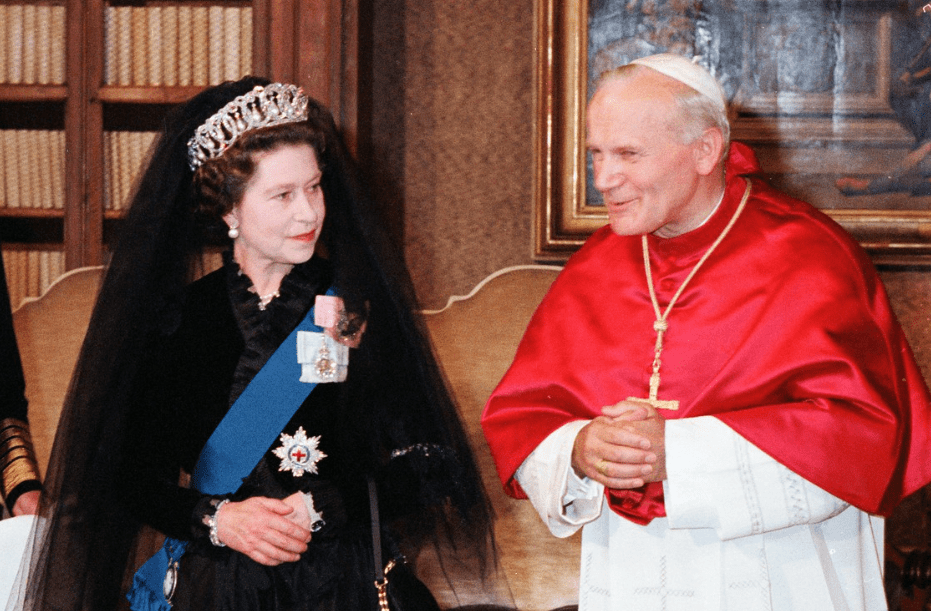
To make US President, Ronald Reagan, laugh during a visit to San Francisco, in 1983:

And to welcome President Michael Higgins for the first ever state visit of an Irish President to the United Kingdom, in 2014:

The Vladimir Tiara was there for so many of the pivotal moments during Queen Elizabeth’s 70 year reign, that it seems fitting it was also there at the end. During a reception for the Diplomatic Corps at Buckingham Palace, on 11th December, 2019, it became the last tiara that Queen Elizabeth II was seen wearing in public.
In its Cambridge Emeralds setting, with an emerald necklace believed to have been part of the Greville bequest, and her mother’s Cartier bracelets, the Queen wore the Vladimir Tiara one last time:
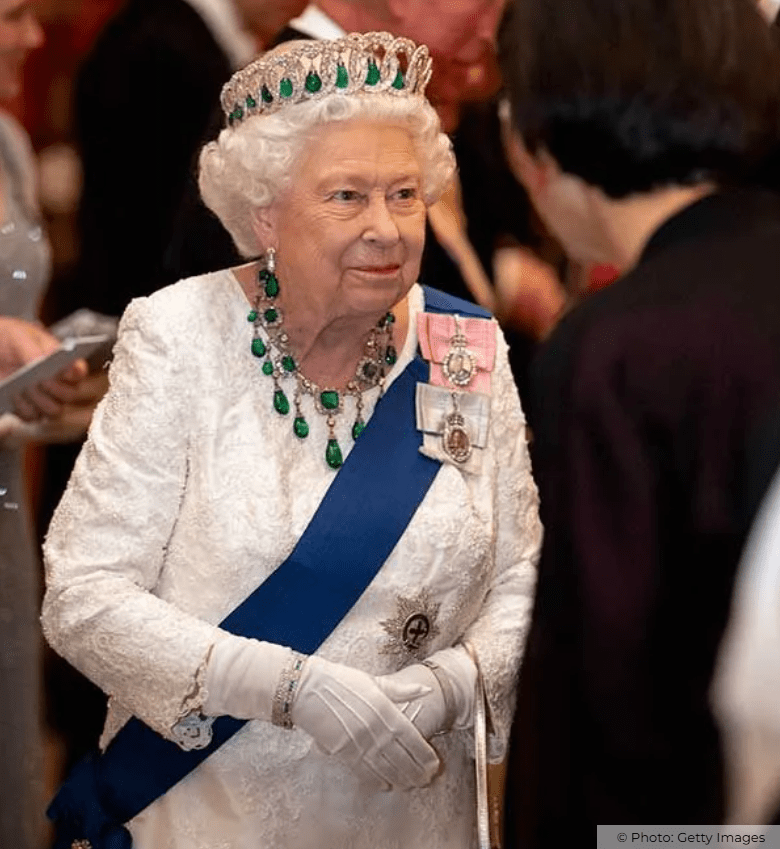
Beyond its glittering beauty, the Vladimir Tiara also holds historical significance; it has survived revolution, political upheaval, and royal transitions. Whether adorned with pearls, emeralds, or worn in its simpler ‘widowed’ form, the tiara continues to captivate royal watchers and jewellery enthusiasts alike, standing as a glittering symbol of both the Russian and British royal legacies.

 Mistress of the Robes