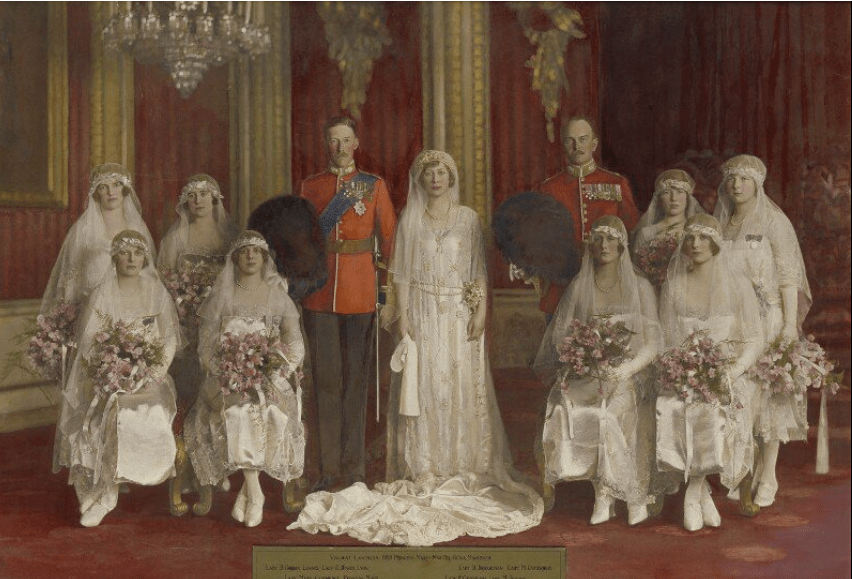
On this day in 1922, Princess Mary, the only daughter of King George V and Queen Mary, married Viscount Henry Lascelles at Westminster Abbey.
Mary and Henry were already acquainted, having moved in similar social circles. However, it was at the Grand National in 1921 that they became closer. Over the following months, their friendship developed, and they met several times at country house parties, including one at Chatsworth – the Duchess of Devonshire was reportedly not surprised by the engagement when the announcement was made. Invitations to Sandringham and Balmoral followed, and, in November, Henry was invited to join the King’s shooting party at Sandringham. It was there, in the woods, that he proposed. Mary’s parents gave their consent, and Queen Mary wrote in her diary:
“At 6.30 Mary came to my room to announce to me her engagement to Lord Lascelles! We then told G. (King George V) & then gave Harry L. our blessing. We had to keep it quiet owing to G. having to pass an order in council to give his consent. Of course everybody guessed what had happened & we were very cheerful & almost uproarious at dinner. We are delighted.”
The wedding was set for Tuesday, 28th February, 1922, at Westminster Abbey, marking a bright moment for a country still recovering from post-war depression. It was also the first royal wedding to be covered by Vogue magazine, which described Princess Mary as ‘a Fairy Princess with Youth, Beauty and Happiness as her attendants.’
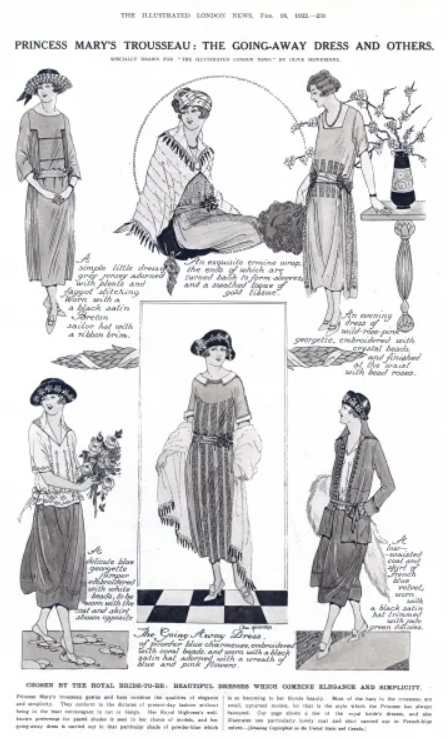
Ahead of the ceremony, details of Princess Mary’s trousseau were revealed. It was described by The Gentlewoman magazine as ‘full of charm and beauty. Delightful colours, blues of every shade, pinks and mauves, are all blended in iridescent effects, while the dresses portray, in mode and draperies, the most becoming lines of the present fashions.’
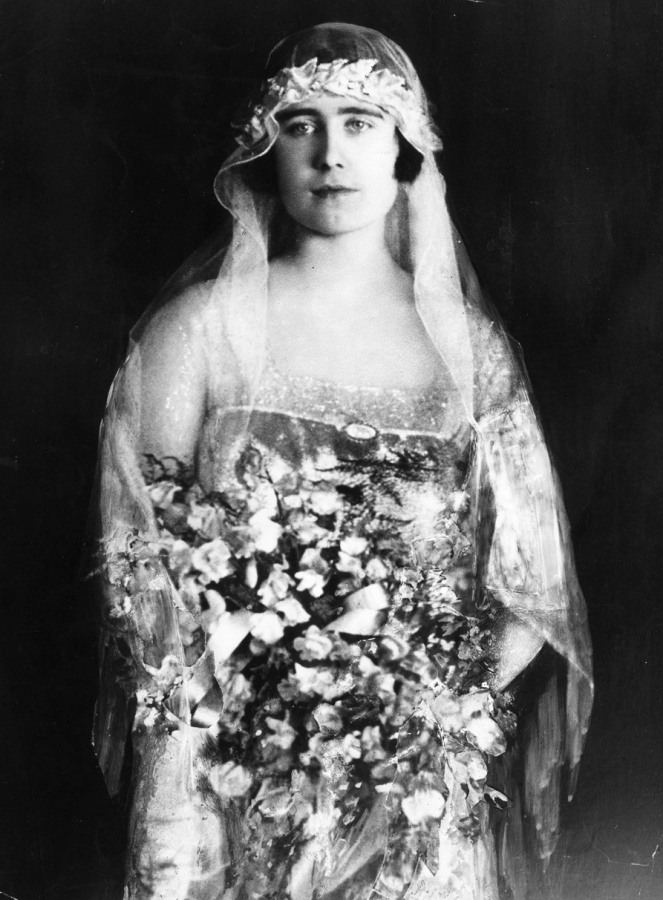
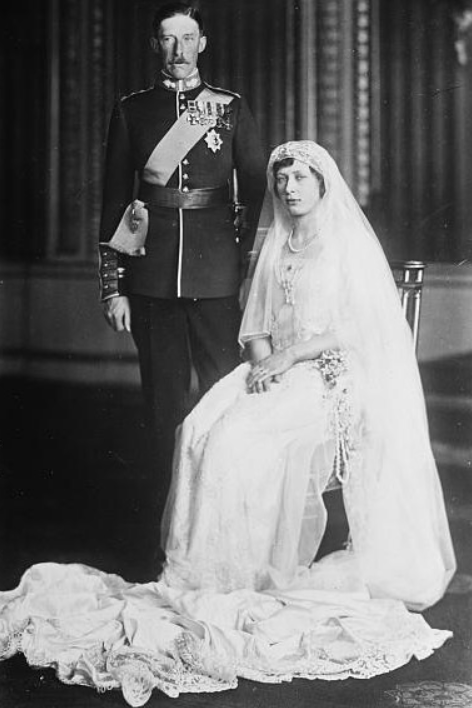
Mary’s wedding dress was created by Messrs Reville Ltd of Hanover Square, London, a company known for their work with the royal family, including the creation of Queen Mary’s coronation dress. The wedding gown featured a drop waist style with three-quarter length sleeves, and consisted of a silver lamé underdress, decorated with silver thread and beads along its lower edge, and an ivory silk marquisette overdress with a rose trellis design made from crystal beads and pearls. At the waist was a frosted silver cord, entwined with seed pearls and finished with a trail of orange blossom.


Her court train was of ivory duchess satin shot with silver, woven at Braintree Mills, and measuring four yards in length. The lower part of the train was embroidered with emblems representing different parts of the empire: the lotus of India, the maple of Canada, the wattle of Australia, and the fern of New Zealand. At the top, and descending either side, was beautiful Honiton lace, which had been gifted by Queen Mary, who had worn it at her wedding – as had her mother, Princess Mary Adelaide, the Duchess of Teck, before her.
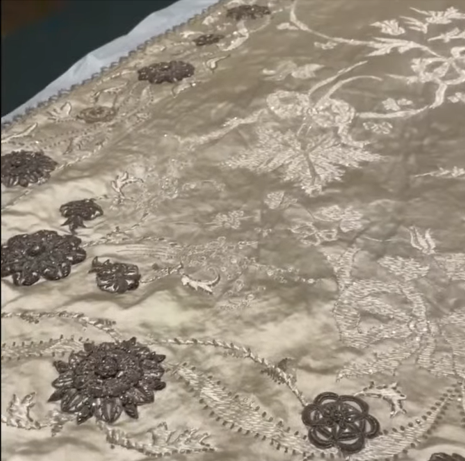
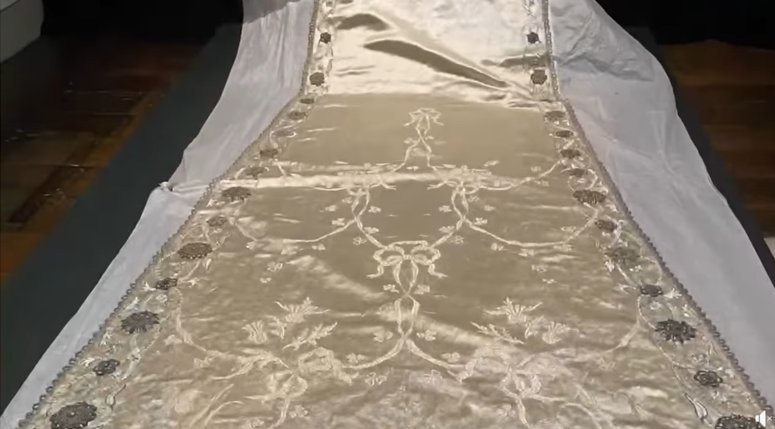


Images © May Berkouwer Textile Conservation and Harewood House
Princess Mary wore a tulle Alençon veil, trimmed with seed pearls, and, instead of a tiara, she opted for strands of orange blossom to secure it in place. On her feet, she wore off-white silk satin shoes, decorated with rosettes made of net and beads. As she travelled to Westminster Abbey in the Glass Coach, accompanied by her father, Mary wore a white ermine cape to protect her from the February chill.
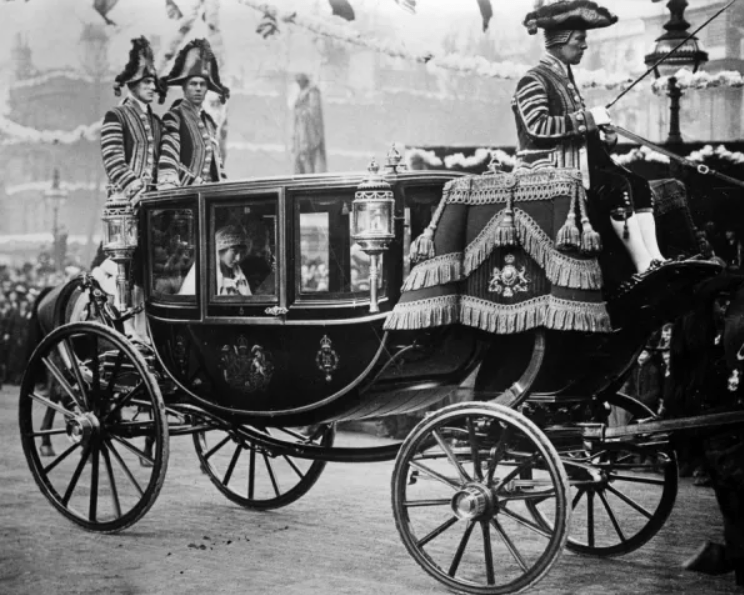
Princess Mary had eight bridesmaids, including three of her cousins, and Lady Elizabeth Bowes-Lyon, the future Queen Elizabeth. The bridesmaids wore dresses of ‘frosted cloth silver draped over ivory satin’. Their sashes were embroidered with mother-of-pearl and silver-lined crystals, and on the left side was a large silver rose of England, entwined with a true lovers’ knot in Mary’s favourite shade of blue. They carried bouquets of sweet peas tied with silver ribbon and wore wreaths of silver leaves and diamond studs over white tulle veils which fell below their waists. Each bridesmaid also wore a brooch given to them by the bridegroom, featuring sapphires and diamonds, with two coronets and the initials M & H.
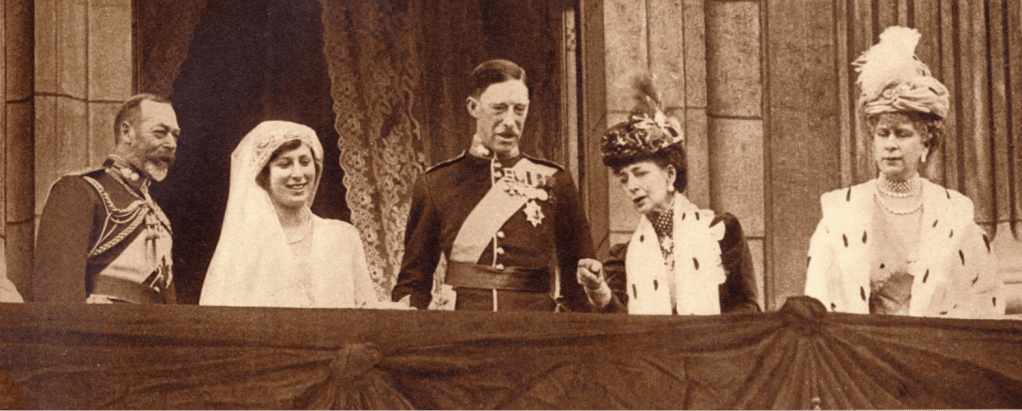
The groom wore the uniform of the Grenadier Guards along with his Order of the Garter blue sash, which had been presented to him by King George V the day before. And Queen Mary, always resplendent, wore a gown of rich cream and gold lace with velvet brocade. Like the bride’s dress, hers also featured a rose design. She completed her outfit with a white tulle toque, adorned with ostrich feathers tipped in gold.
After the ceremony, the newlyweds returned to Buckingham Palace for the wedding breakfast, passing through crowds of cheering onlookers. They briefly stopped to lay the bride’s bouquet at the Cenotaph. The couple then appeared on the balcony with the King and Queen, as well as Queen Alexandra, before sitting down to a wedding breakfast with 100 invited guests.
Before leaving for their honeymoon, Princess Mary changed into her going away outfit which was made by Handley Seymour, a London based designer who went on to create both the wedding and coronation dresses of Queen Elizabeth, the Queen Mother. Mary’s dress, part of the Historic Royal Palaces’ Royal Dress Collection, is described as a blue silk charmeuse dress with a boatneck and short kimono sleeves. It was decorated with bands embroidered in blue silk, accented with crystal and pale pink coral beads. The dress featured a self sash and a blue velvet rose corsage at the waist, with a beaded detail.
Over this dress she is reported to have worn a moleskin fur coat by Revillon Frères, and a picture hat of blue georgette, made by Angrave, Ltd.


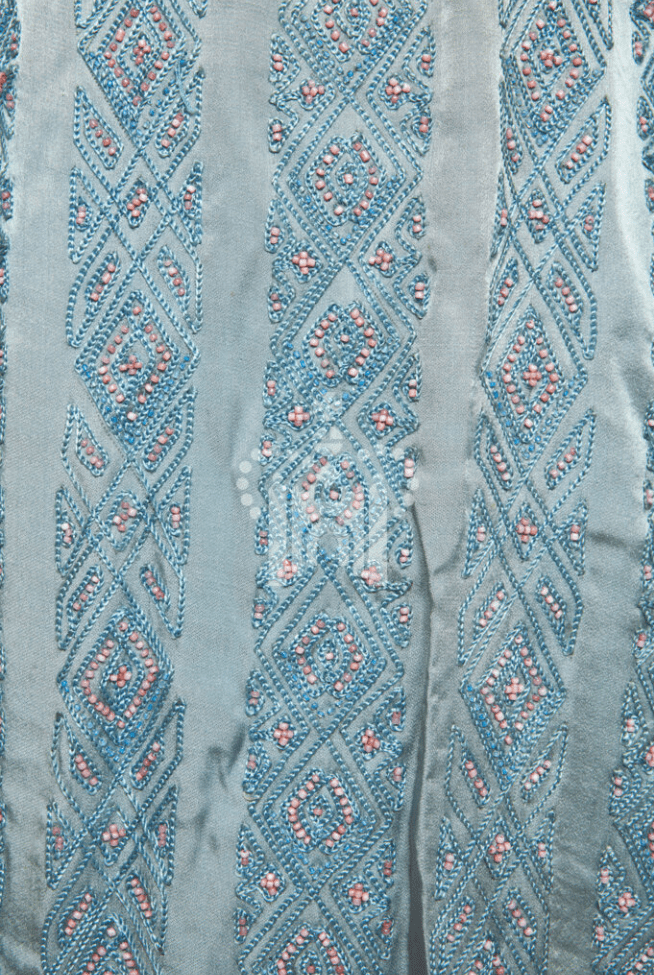
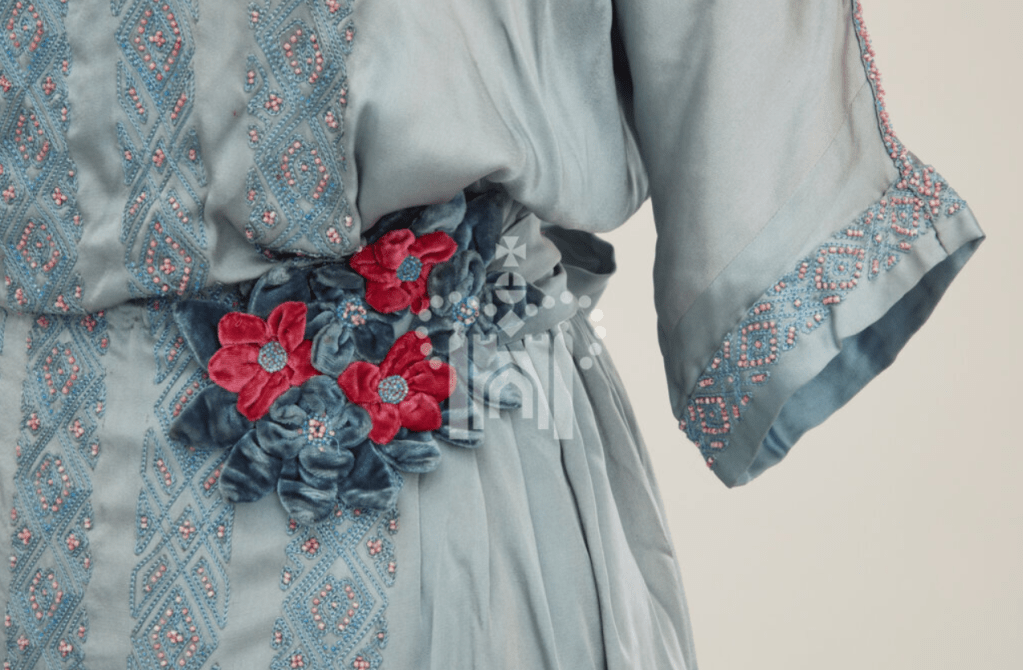
©Historic Royal Palaces
The newlyweds left Buckingham Palace at 3:45 pm in a landau drawn by four grey horses and headed for Paddington Station, where a special ‘Honeymoon Express’ train had been arranged for them. They traveled to Weston Park in Weston-under-Lizard, the ancestral home of the bridegroom’s mother’s family, the Earls of Bradford. After spending a few days there, the couple continued their honeymoon in Florence, Italy, staying at the Villa Medici before moving on to Paris.
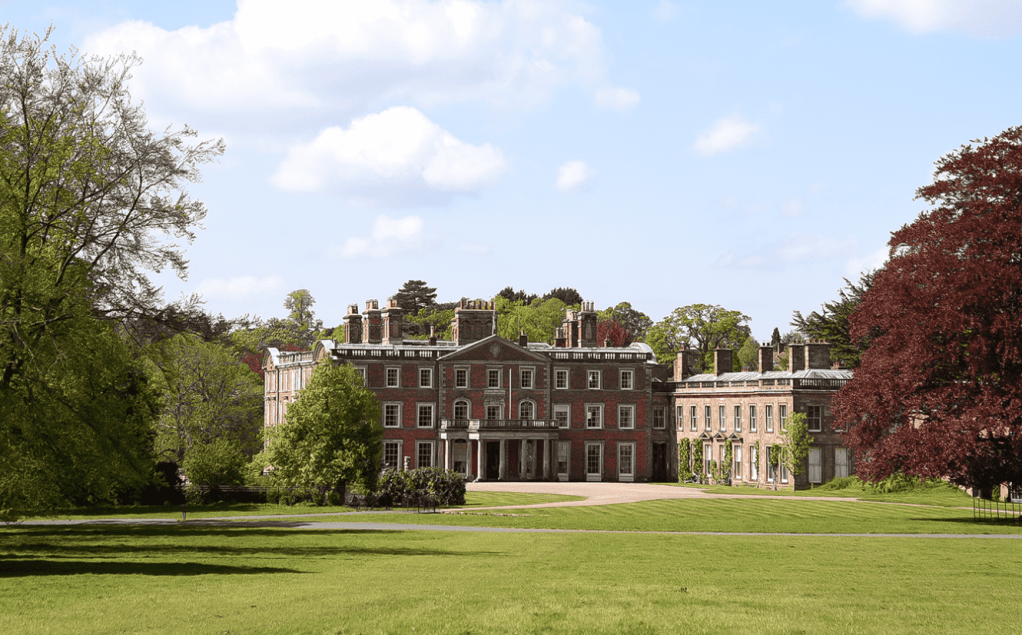
Princess Mary’s wedding dress set has been displayed multiple times, most recently at Harewood House in 2022. To protect these delicate items, now over one hundred years old, careful conservation work has been done. One of the conservators, May Berkouwer Textile Conservation, worked on the pieces in 2019. For those interested in the conservation of historical dress, further details and photographs can be found on their website here.
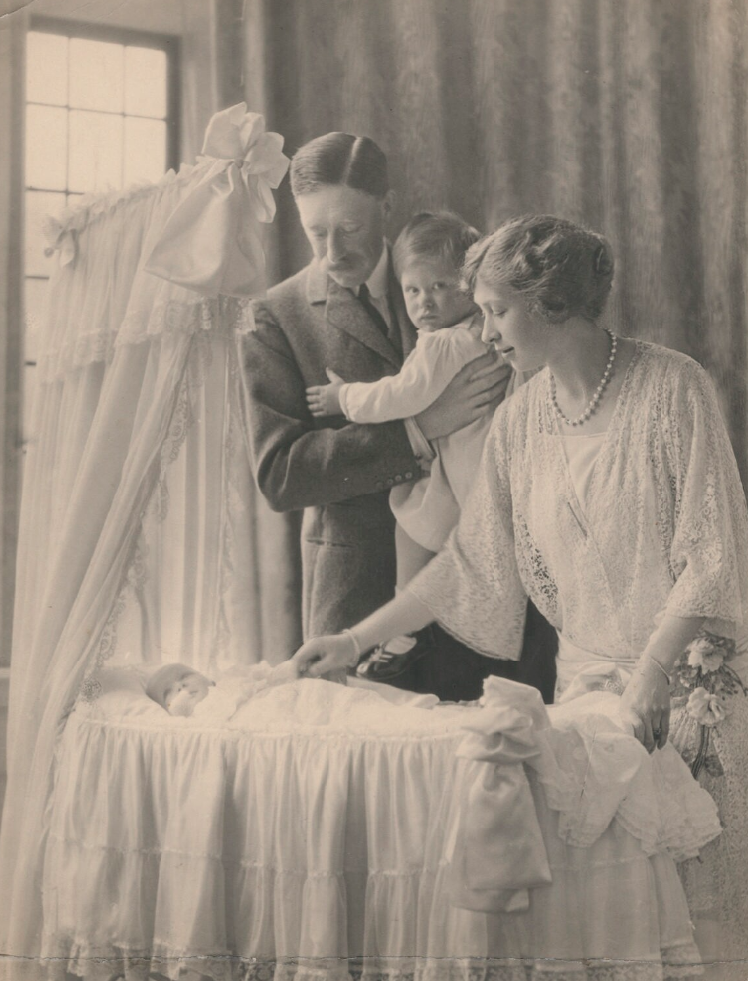
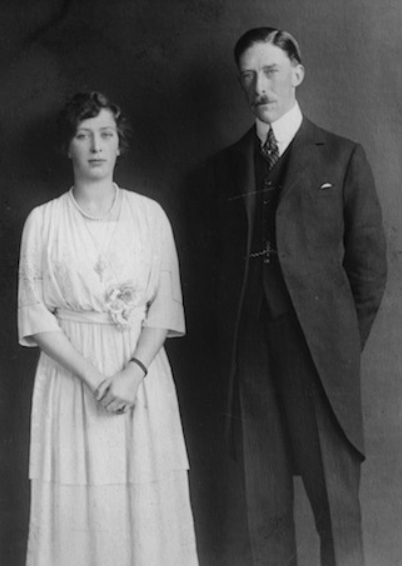
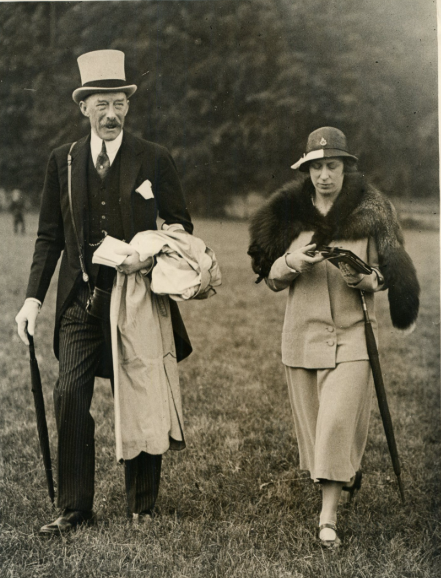
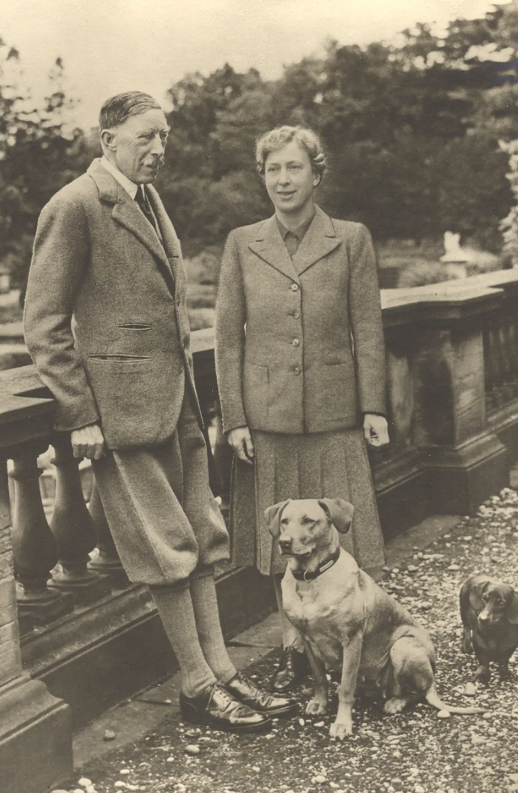
Mary and Henry were married for twenty-five years. In October 1929, they became the Earl and Countess of Harewood after Henry’s father passed away. They had two sons, George and Gerald, and made their home at Harewood House in Yorkshire. Henry died of a heart attack in 1947, and Mary lived for another 18 years. Despite rumors to the contrary, their eldest son, George, stated that their marriage was a happy one and that they “got on well together.” Mary was reportedly devastated by her husband’s death, and in later years, she had her Christmas card photos taken beneath his portrait, much like her great-grandmother, Queen Victoria did with Prince Albert.

Edit: 11/03/2025
I managed to view some images from the Royal Ceremonial Dress collection recently, and found amongst them a further picture of Princess Mary’s going away outfit. An image of a small blue and coral ‘lucky’ horseshoe embroidered inside the hem of her dress.


 Mistress of the Robes