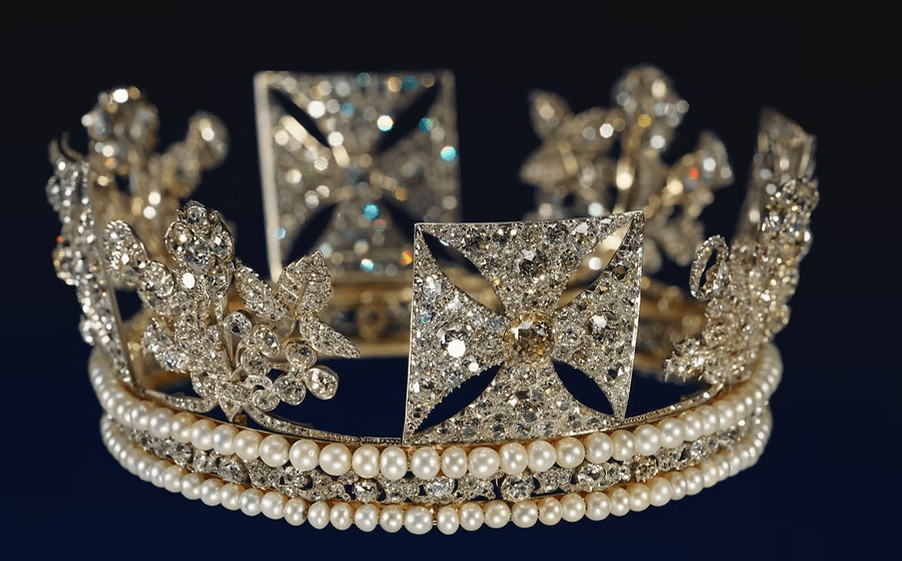
Not quite a tiara, I know! But probably the most well known ‘sparkler’ in the royal collection, and thoroughly worthy of this inaugural ‘Tiara Tuesday’ post.
Instantly recognisable to many as the iconic crown featured on Queen Elizabeth II’s image on coins and stamps, this remarkable piece of jewellery was originally created for the coronation of George IV. It was designed for him to wear over his Cap of Estate during the procession to Westminster Abbey.
Renowned for his lavish spending and love of fine jewellery, George IV commissioned the diadem from the royal jeweller, Rundell, Bridge & Rundell in 1820; it was completed by May of the same year. Originally scheduled for August 1820, his coronation was delayed until 1821 due to ongoing divorce proceedings with his estranged wife, Caroline.
Crafted from silver and gold, the diadem features 1,333 diamonds, including a prominent 4-carat yellow diamond in the central cross. Surrounding the base are 169 natural pearls, and between the crosses are four delicate sprays representing the nations of England, Scotland, and Ireland – a shamrock, a rose, and a thistle.
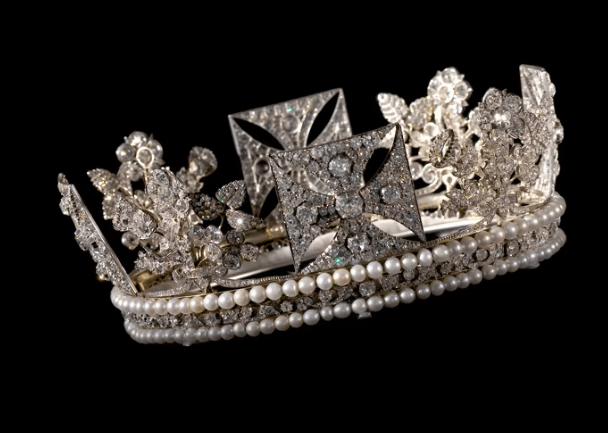
It was created along with a diamond studded loop – this was sadly ‘repurposed’ later, and the diamonds used to make Queen Victoria’s Garter armlet. The total cost was £8,216, which included a charge of £800 for the hire of the diamonds, a charge which was increased due to the delayed coronation. Until 1837, it was standard practice to hire jewels for coronations. Usually, they were returned afterward; however, according to the Royal Collection Trust, there is no evidence that the diamonds were removed, as their settings remain undisturbed. Furthermore, there is no record of George IV purchasing the stones, leaving their ultimate fate unclear. It is speculated that they were exchanged for other stones from the king’s personal collection.
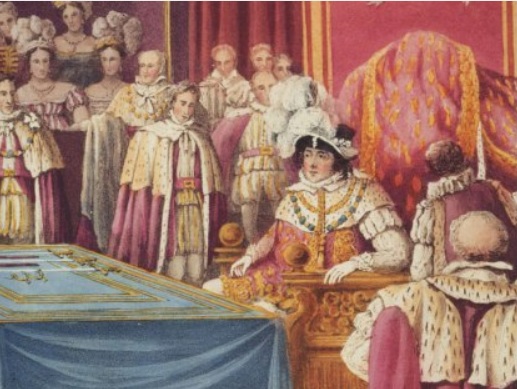
When the long-awaited coronation finally took place, George IV wore the diadem during his procession to Westminster Abbey, atop a large velvet Spanish-style hat, adorned with an enormous ostrich feather plume. The plume was so large that it obscured much of the exquisite craftsmanship of the diadem, making it barely visible to onlookers.
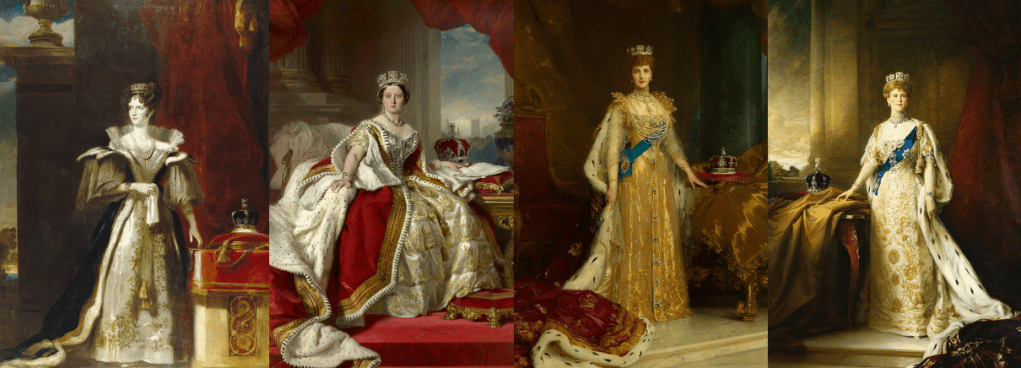
Although designed for a king, after George IV’s reign was over, the diadem was exclusively worn queens – both consort and regnant. It passed firstly to his sister-in-law, Queen Adelaide, then to their niece, Queen Victoria. In 1902 it was shrunk by 11 diamonds in order to fit the smaller head of Queen Alexandra, and was later resized again to fit Queen Elizabeth (later the Queen Mother).
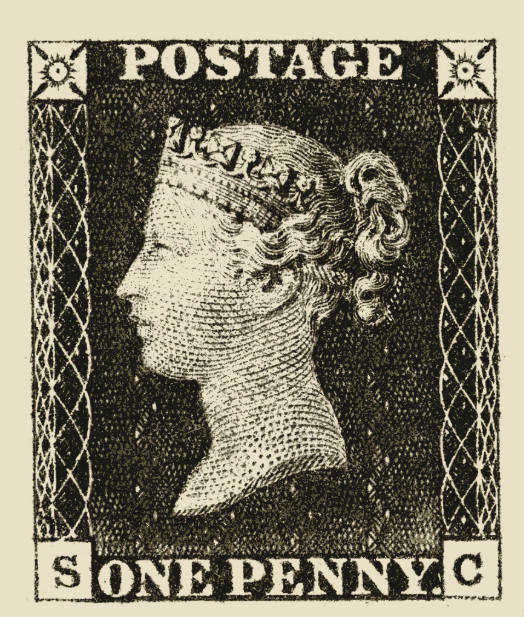
When the first postage stamp was released on 1st May, 1840, the ‘Penny Black’ featured an engraved portrait of Queen Victoria wearing the Diamond Diadem:
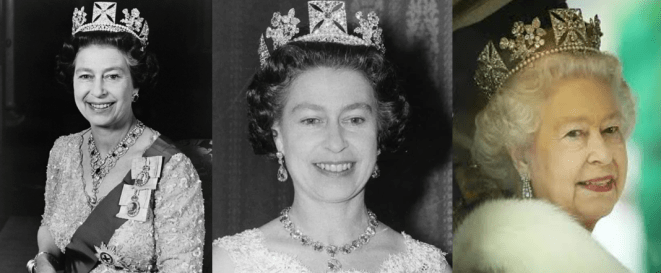
After the death of Queen Mary, the Diadem passed to her granddaughter. Queen Elizabeth II wore it publicly for the first time at the State Opening of Parliament on 4th November, 1952:
And then, like George IV before her, she wore it during the journey to Westminster Abbey, ahead of her coronation:
She went on to wear the Diadem throughout her long reign:
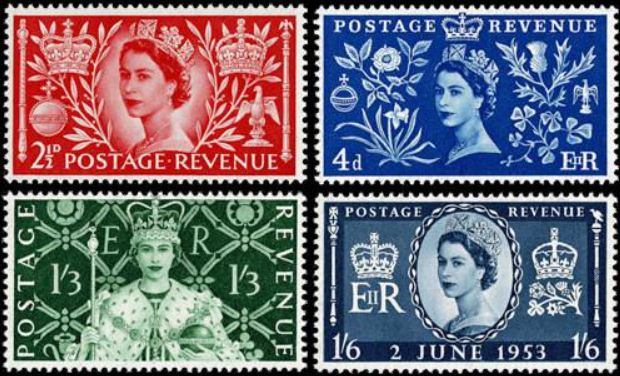
Famously appearing on currency and postage stamps, both in the UK and across the Commonwealth:
Following her death in 2022, the Diadem passed on to her daughter-in-law, Queen Camilla, who, in keeping with tradition, wore it during King Charles III’s first State Opening of Parliament in 2023.
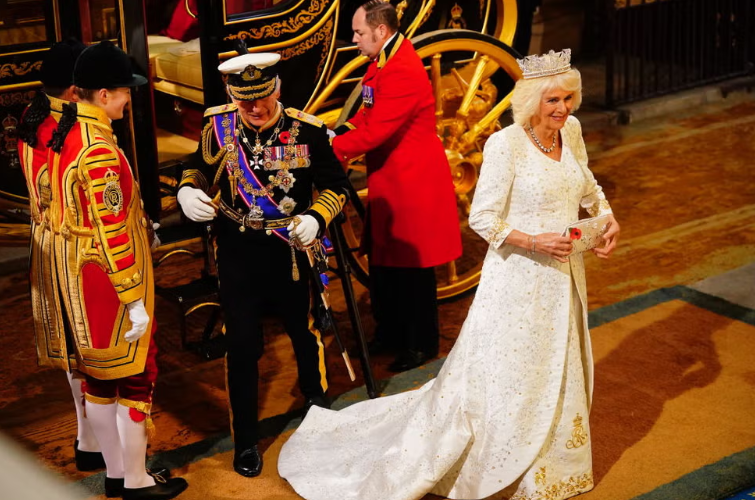
It will continue to be worn by Camilla at state occasions like this, until the time comes for it to pass to the next generation.

 Mistress of the Robes